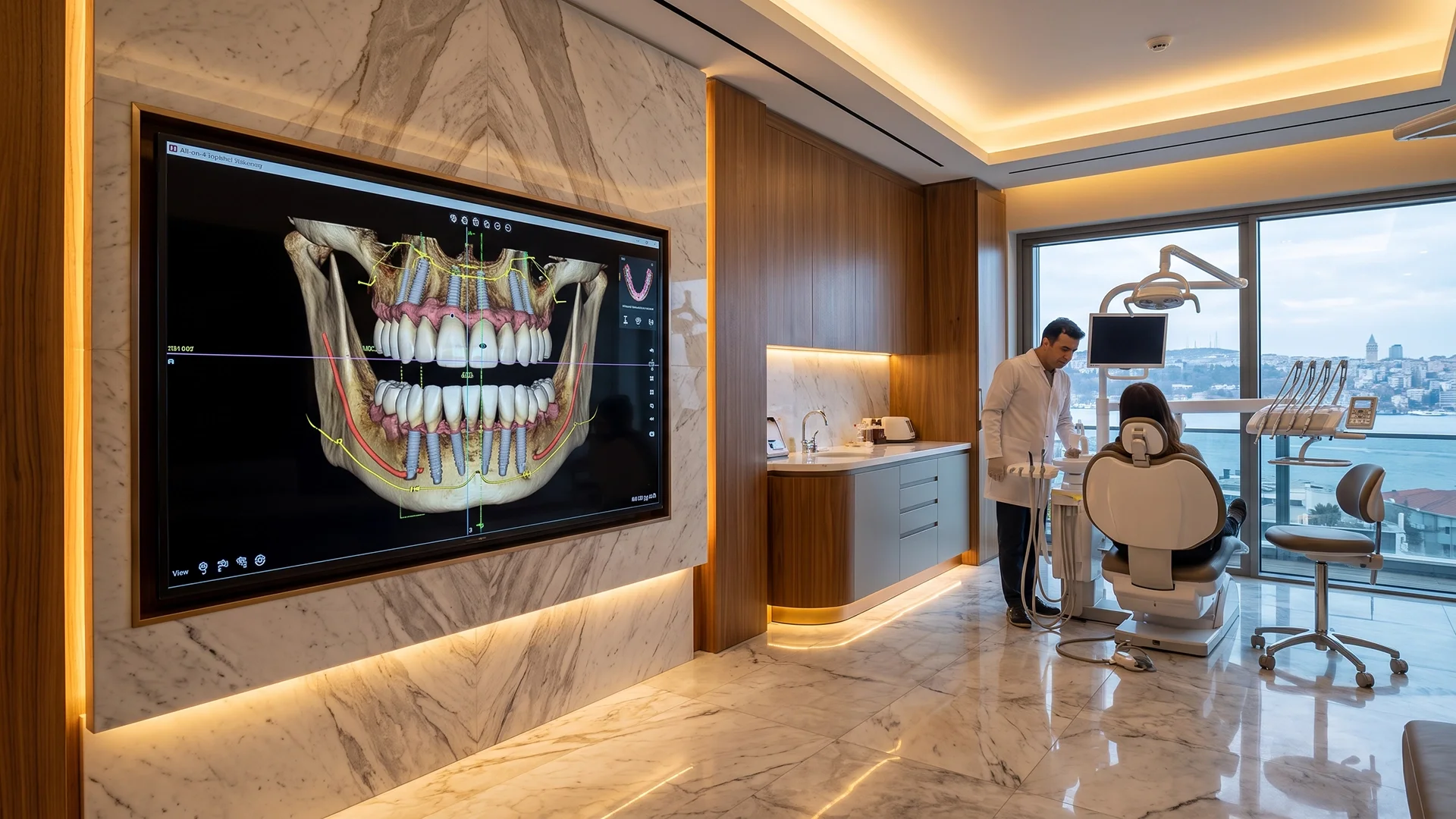
All-on-4 implants offer a full-mouth restoration, but clinics claiming same-day permanent teeth often lead to failures. Read our honest, prosthodontist-reviewed guide on materials, gnatology, and realistic healing times.
For individuals facing severe tooth loss, decay, or advanced periodontal disease, the All-on-4 dental implant technique is a life-changing treatment. By placing four dental implants in strategically angled positions, a surgeon can support a full-arch fixed prosthesis. This eliminates the need for slippery dentures and restores up to 90% of natural chewing function.
Because full-mouth dental restoration is a premium procedure that costs tens of thousands of dollars in Western countries, Turkey has become a global hub for All-on-4 treatments. However, the complexity of this procedure makes it vulnerable to clinical shortcuts. Here is the honest clinical truth you must evaluate before choosing a clinic for full-mouth implants.
1. The Mechanics: Why Angles and Bone Density Matter
The core innovation of the All-on-4 technique lies in the tilting of the posterior (back) implants at a 30 to 45 degree angle. This angling allows the implants to utilize the denser bone available in the anterior (front) region of the jaw.
By maximizing the contact between the implant and the bone, the procedure often bypasses the need for extensive bone grafting or sinus lift surgeries. However, this is a highly technique-sensitive protocol. If the implants are angled incorrectly, the chewing forces will be distributed unevenly, leading to bone loss around the implants and, ultimately, structural failure. Only undergo this treatment with an experienced oral surgeon or prosthodontist.
2. The Trap: Same-Day Permanent Teeth Claims
Many low-cost clinics advertise "Permanent Teeth in a Single Day" packages. This is a highly misleading and dangerous marketing tactic.
- Immediate Loading (Temporary Bridge): On the day of surgery, the implants are placed and a temporary acrylic bridge is screwed onto them. This temporary bridge is designed strictly for aesthetics and light chewing (a soft food diet). Its purpose is to allow you to smile while your implants undergo osseointegration.
- Osseointegration (The Healing Phase): It takes 3 to 6 months for the titanium implant posts to fuse completely with your jawbone. During this phase, the implants must not be subjected to heavy biting forces.
- The Final Prosthesis: Only after the osseointegration is complete can the dentist take final impressions and fit your permanent, metal-reinforced zirconium or ceramic bridge.
If a clinic fits a heavy, permanent zirconium bridge on the day of surgery, the immediate load will prevent the implants from fusing with the bone, causing them to fail within months.
3. Material Quality: Protecting Your Investment
The materials used for both the implants and the final bridge dictate the longevity of your restoration. You must ask for specific brands:
- Implant Brands: Demand premium, lifetime-guaranteed brands such as Straumann, Nobel Biocare, or Astra Tech. These manufacturers have decades of clinical research backing their surface technologies, which promote faster bone healing. Avoid clinics that use generic, unbranded implants.
- Bridge Materials: The permanent bridge should be constructed from layered zirconia or monolithic zirconium supported by a titanium bar. Budget clinics often use cheap, unreinforced PMMA (acrylic) for the final teeth, which stains, wears down, and breaks under normal chewing pressure.
4. Gnatology: The Importance of Bite Analysis
Replacing a full mouth of teeth is not just about making them look straight. It is about restoring your bite (occlusion) in perfect alignment with your temporomandibular joint (TMJ).
If the final bridge is even a fraction of a millimeter off-balance, it can cause severe TMJ disorder, chronic jaw pain, headaches, and rapid wear on the implants. A premium restoration requires an expert in gnatology and prosthodontics (such as Dr. Nesrin Sonmez, who specializes in complex bite restorations) to customize the bite alignment. This is critical for patients with a history of bruxism (teeth grinding), who require specialized night guards to protect their new smile.
5. Cost Comparison: All-on-4 Budget Guide (2026)
Here is a realistic pricing comparison per jaw (including implants and the final permanent bridge) for 2026:
| Material & Brand Tier | UK Cost (per jaw) | Turkey Cost (per jaw) | Typical Savings |
|---|---|---|---|
| Standard Implants + Acrylic Bridge | £10,000 - £12,000 | £3,500 - £4,800 | ~60-65% |
| Premium Implants (Straumann/Nobel) + Zirconia Bridge | £14,000 - £18,000 | £5,500 - £8,000 | ~55-60% |
Pricing significantly below these levels should be treated as a warning sign. High-quality raw materials and laboratory artists (ceramists) have standard base costs; extreme discounts always suggest compromised clinical standards.
Final Thoughts
An All-on-4 restoration is a lifetime investment. By selecting a registered prosthodontist, ensuring the use of premium implant brands, and adhering to the realistic 3 to 6 month healing window, you can safely restore your smile and enjoy a natural, stable bite for decades.
Medical disclaimer: This article is for informational purposes only and does not replace professional medical advice.