Jaw Bone Loss
Jaw bone loss, or alveolar atrophy, is the progressive resorption of ridge bone following tooth extraction, chronic periodontitis, or long-term denture use. Bone volume diminishes in height and width, and maxillary sinus pneumatisation further reduces available bone in the upper posterior jaw, preventing implant placement without prior augmentation.
Why Jaw Bone Loss Compounds the Longer It Is Left
Bone is a dynamic tissue that remodels in response to mechanical loading. When a tooth root is removed, the alveolar bone that surrounded it no longer receives the stimulation it needs to maintain its volume, and resorption begins within weeks of extraction. The process accelerates over months and years, and conventional dentures sitting on the ridge surface actively worsen atrophy by applying compressive pressure rather than the tensile and shear forces that preserve bone density. Patients who have worn full dentures for ten or more years often present with ridges so resorbed that standard implant placement is no longer possible without major bone reconstruction.
Vellum Select's Istanbul oral surgeons specialise in bone volume reconstruction using autogenous block grafts, particulate xenograft materials, and sinus lift procedures, restoring the foundation for stable implant placement at costs 60 to 70 per cent below UK and Northern European oral surgery rates.
Treatment Options for Jaw Bone Loss
View All ProceduresSymptoms of Jaw Bone Loss
Jaw bone loss is often asymptomatic until it becomes clinically significant. In patients with existing dentures, signs include increasing denture instability, soreness from a diminishing ridge that no longer provides adequate support, and a visibly shrinking lower face as vertical dimension is lost. In partially dentate patients, bone loss around remaining teeth presents as visible furcation exposure, tooth elongation, and mobility. In the upper posterior jaw, sinus expansion into the ridge can be identified on imaging before any symptoms develop.
Diagnostic Pathways
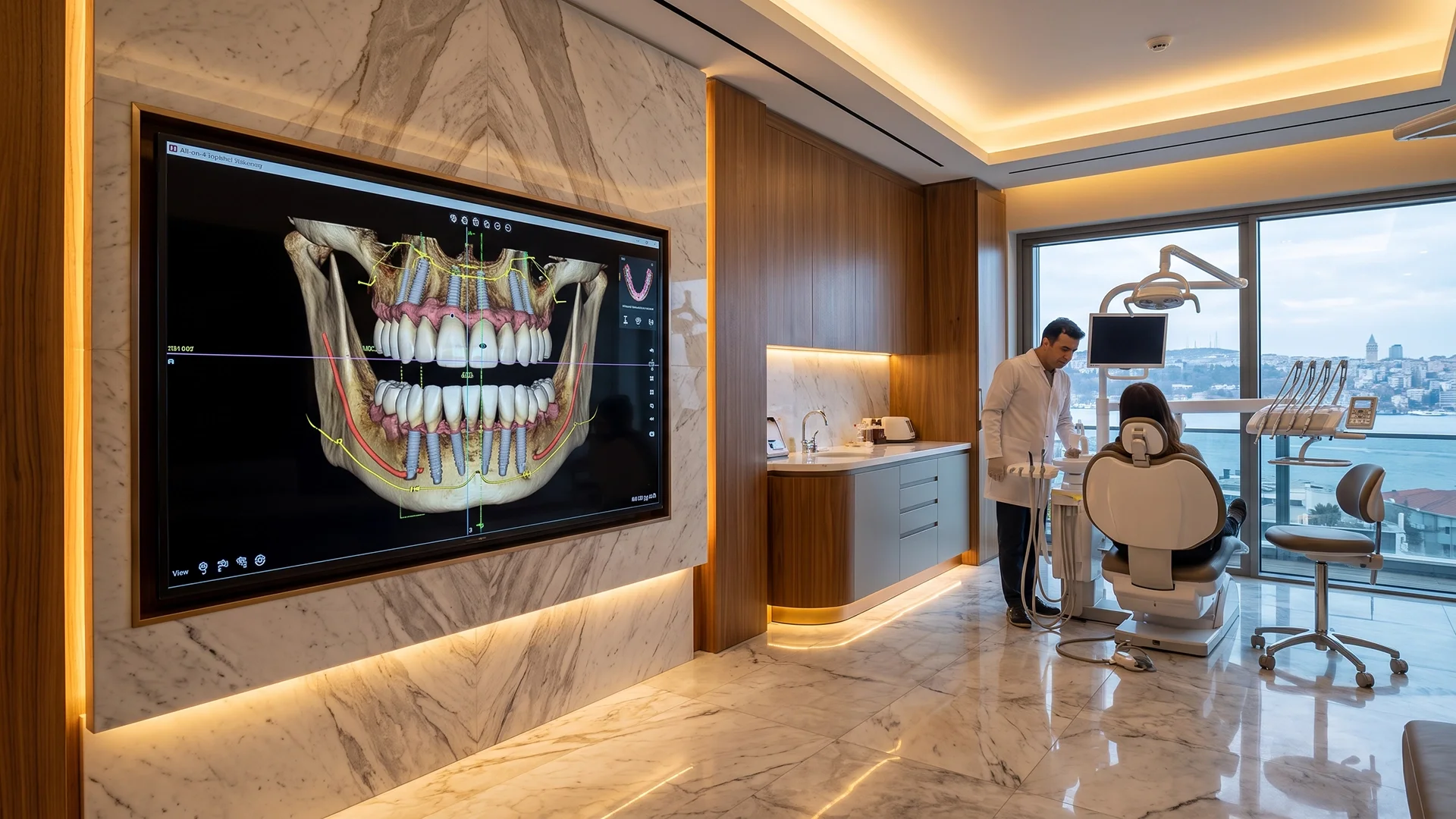
CBCT three-dimensional imaging is the definitive diagnostic tool, providing precise measurements of bone height, width, and density at planned implant sites. The proximity of the maxillary sinus floor, the inferior alveolar nerve canal, and adjacent tooth roots is mapped before any surgical planning. Bone density is assessed in Hounsfield units to select implant dimensions and predict healing timelines. Where the cause is periodontal in origin, full periodontal charting and radiographic bone level assessment identify any active disease that must be stabilised before augmentation.
Advanced Treatment Options at Vellum Select
Vellum Select's Istanbul oral surgery team offers the full range of bone augmentation techniques, selecting the approach that provides the most predictable volume gain for each specific defect.
Bone Grafting and Sinus Lift
Lateral or crestal sinus lift procedures elevate the sinus membrane and pack bone graft material beneath it, restoring posterior maxillary height for implant placement. Horizontal and vertical ridge augmentation using block grafts or guided bone regeneration with titanium mesh addresses deficient ridges elsewhere in the arch. Learn more about Bone Grafting and Sinus Lift in Turkey.