Bone Grafting & Sinus Lift in Turkey
FREE PRE-EVALUATION
Upload your Photos, X-Rays or MRI Reports to request analysis from a specialist.
Consultant Status: Online
Rebuilding the Foundation for Dental Implants
Every successful dental implant depends on one factor above all others: the quality and volume of the bone that anchors it. When teeth are lost, the alveolar bone that once surrounded them begins to resorb, a process that accelerates with time. In the posterior upper jaw, the maxillary sinus expands into the vacated space, leaving a wafer-thin layer of bone that cannot support an implant. In the lower jaw, the mandibular canal housing the inferior alveolar nerve limits implant depth.
Istanbul's implant surgeons restore lost bone with precision grafting techniques, using the patient's own bone, donor bone, or synthetic substitutes. A sinus lift can create 8 to 12 millimetres of new bone height in a single procedure, and full-arch reconstructions combining grafts and implants are delivered at 65 per cent below UK, German, and North American prices.
Conditions This Treatment Addresses
Frequently Asked Questions
About Bone Grafting & Sinus Lift in Turkey
What is a sinus lift and when is it needed?
A sinus lift is a bone grafting procedure that adds bone to the upper jaw in the area of the premolar and molar teeth, between the jaw and the maxillary sinuses on either side of the nose. It is needed when the posterior maxilla has insufficient bone height for dental implants because the sinus has expanded downward, leaving less than 5 mm of bone. The procedure elevates the sinus membrane and places bone graft underneath.
How painful is bone grafting surgery?
The procedure itself is pain-free as it is performed under local anaesthesia with or without sedation. Post-operative discomfort is typically mild to moderate and peaks at 24 to 48 hours, managed effectively with prescribed analgesics. Most patients compare the recovery to a tooth extraction and return to normal activities within 2 to 3 days.
How long does it take for a bone graft to heal?
The graft material integrates with your natural bone over 4 to 6 months. During the first 2 weeks, soft tissue heals over the graft. By 3 months, the graft has consolidated sufficiently for implant placement in most cases, though larger grafts or sinus lifts may require the full 6 months. A CBCT scan confirms readiness.
Can I have dental implants at the same time as a bone graft?
Yes, in many cases. If at least 3 mm of existing bone is available to stabilise the implant initially, simultaneous implant placement with grafting is possible and reduces total treatment time by 4 to 6 months. Your surgeon will determine this based on CBCT imaging.
How much does a sinus lift cost in Turkey?
A sinus lift in Istanbul costs approximately £400–£800 per side, compared to £1,500–£3,000 in the UK. The price includes the graft material, membrane, surgical fee, and follow-up imaging. Combined graft-and-implant packages provide additional savings.
What is the success rate of bone grafting for implants?
Bone grafting success rates exceed 95 per cent when performed by experienced surgeons using proper technique and materials. Key factors include adequate blood supply to the graft site, infection control, and patient compliance with post-operative instructions, particularly avoiding pressure on the graft during healing.
What Is Bone Grafting and Sinus Lift Surgery?
Bone grafting involves placing a scaffold material—whether autogenous bone (harvested from the patient's chin, ramus, or iliac crest), allograft (donor bone), xenograft (bovine-derived mineral), or synthetic alloplast—at a deficient site. The graft acts as an osteoconductive framework that the patient's own bone cells colonise over 4 to 6 months, gradually replacing the graft with living, load-bearing bone.
A sinus lift (maxillary sinus floor elevation) is a site-specific bone graft performed in the posterior maxilla. The surgeon accesses the maxillary sinus through a small window in the lateral wall, carefully elevates the Schneiderian membrane, and packs graft material into the space created. Over the following months, new bone forms beneath the elevated sinus floor.
Who Needs Bone Grafting?
Bone grafting is indicated whenever existing bone volume is insufficient for reliable implant placement. Common scenarios include tooth loss more than 1 year prior with significant ridge resorption, advanced periodontal disease that destroyed supporting bone, trauma causing alveolar fracture and bone loss, congenital ridge deficiencies, and long-term denture wear where compression has accelerated resorption. If you can feel the ridge with your finger and it feels sharp or narrow, grafting is almost certainly required.
Advanced Treatment Options at Vellum Select
Sinus Lift (Maxillary Sinus Floor Elevation)
For the posterior upper jaw where the sinus has pneumatised leaving less than 5 mm of bone height, a sinus lift creates 8 to 12 mm of new bone. The lateral window approach provides excellent visualisation and is the gold standard. The procedure takes 60 to 90 minutes and implants can be placed simultaneously if at least 3 mm of initial bone exists, or after a 4- to 6-month healing period if not.
Ridge Augmentation (Guided Bone Regeneration)
When the jaw ridge has narrowed or lost height following tooth loss, particulate bone graft is placed in the defect and covered with a resorbable collagen membrane that excludes fast-growing soft tissue cells while allowing slower-growing osteoblasts to populate the graft. This guided bone regeneration technique restores the ridge to implant-ready dimensions.
Block Bone Graft
For larger defects where particulate graft lacks mechanical stability, a solid block of autogenous bone is harvested from the patient's chin or ramus and secured to the deficient ridge with titanium fixation screws. Block grafts consolidate over 4 to 6 months before implant placement.
Bone Grafting and Sinus Lift Cost in Turkey vs. the UK and Europe
| Procedure | UK Cost | Turkey (Istanbul) Cost |
|---|---|---|
| Sinus Lift (single side) | £1,500–£3,000 | £400–£800 |
| Ridge Augmentation | £800–£2,000 | £250–£600 |
| Block Bone Graft | £2,000–£4,000 | £600–£1,200 |
| Full-Arch Graft + Implants | £15,000–£30,000 | £4,000–£8,000 |
Prices in Istanbul are comprehensive and include the graft material, membrane, surgical fee, and follow-up imaging. Autogenous block grafts cost more due to the second surgical site.
The Procedure: What to Expect
Step 1: Preoperative Planning (Day 1)
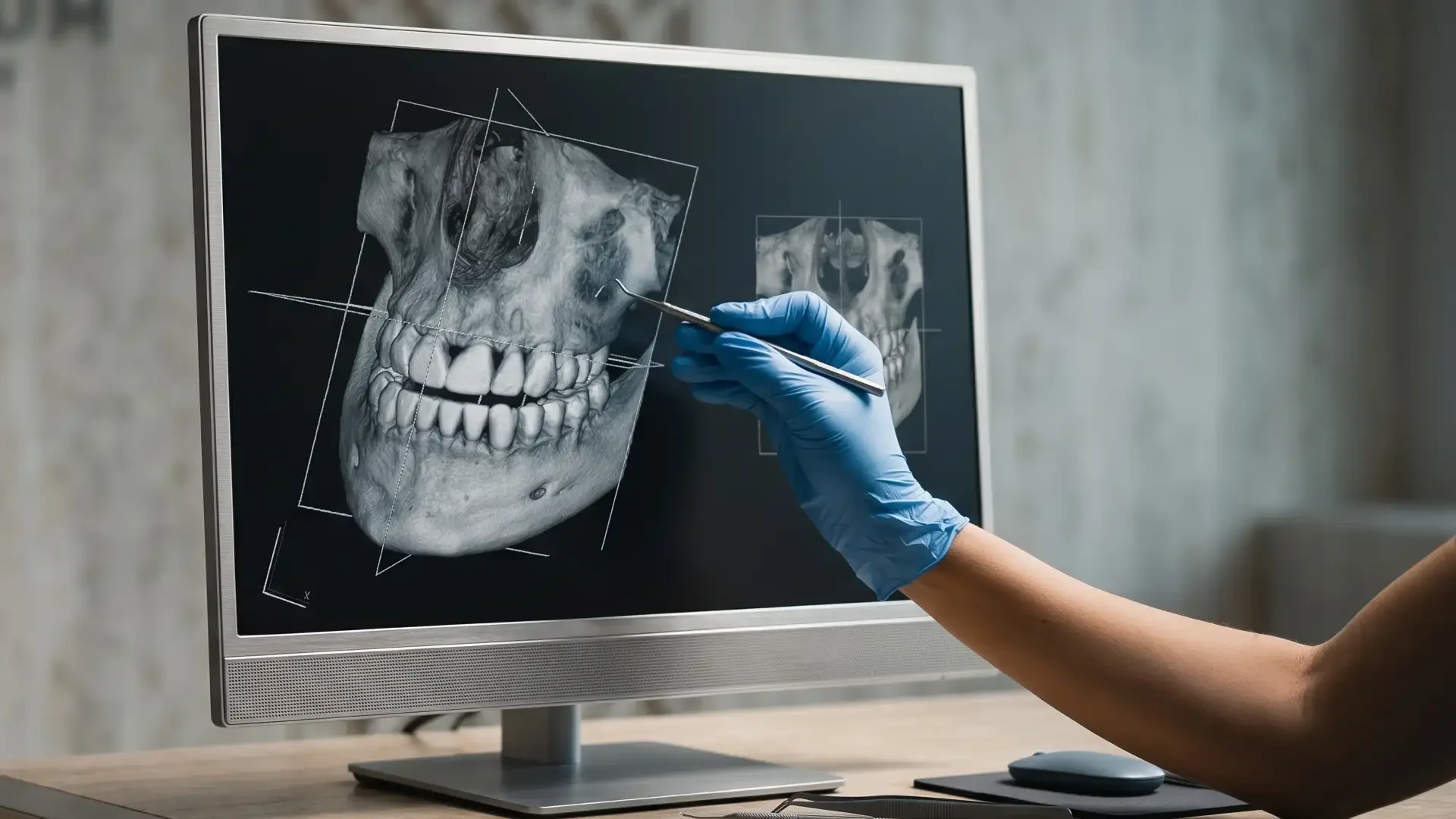
Cone-beam CT (CBCT) imaging maps the existing bone volume in three dimensions, measures the proximity of the sinus and mandibular canal, and determines the exact graft dimensions required. The surgeon reviews the CBCT with you and confirms the surgical plan.
Step 2: Graft Surgery (60–90 minutes)
Under local anaesthesia with or without sedation, the surgeon makes a small incision in the gum, reflects the tissue, and places the graft material. A resorbable membrane covers the graft. The incision is closed with sutures. For sinus lifts, a small window is made in the lateral sinus wall and the membrane elevated before graft placement.
Step 3: Healing Phase (4–6 months)
The graft integrates with your natural bone. During this period, you can wear a temporary prosthesis but must avoid loading the graft site. CBCT at 3 months confirms integration. Implants are placed once the graft has matured.
Meet Your Istanbul Surgeons
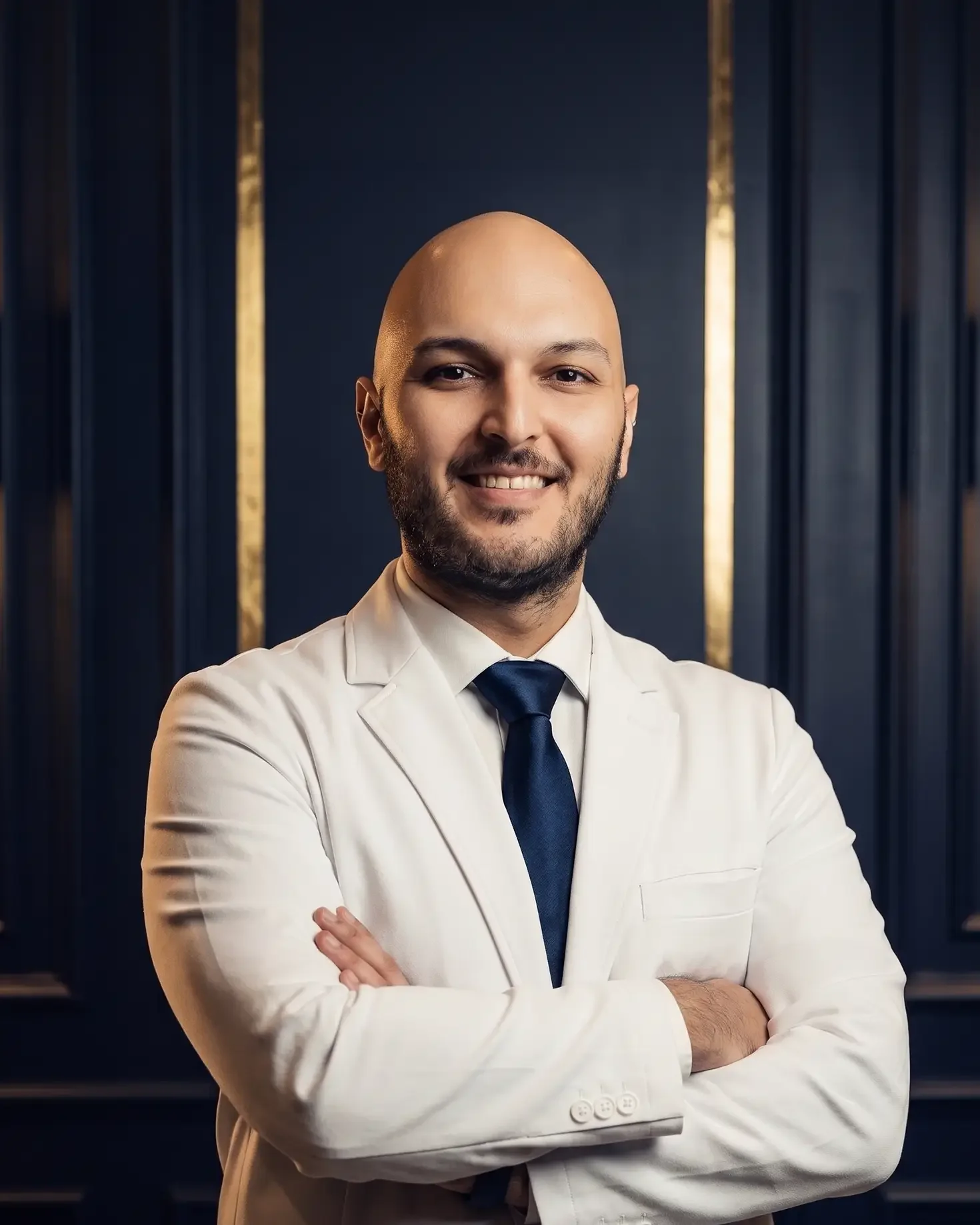
Vellum Select works with implant surgeons who each place over 1,000 dental implants per year and have extensive grafting experience. Their clinics use the latest CBCT imaging, piezoelectric surgical tools for atraumatic graft preparation, and platelet-rich fibrin (PRF) membranes derived from your own blood to accelerate healing. PRF contains concentrated growth factors that speed bone formation and reduce post-operative discomfort.
Journey to Recovery
Day 1: Graft Surgery and Immediate Aftercare
The grafting or sinus lift procedure is performed under local anaesthesia with or without sedation and takes 60 to 90 minutes. You will be given post-operative instructions, antibiotics, and an antimicrobial mouth rinse. Some swelling, minor bleeding, and discomfort is normal and managed with prescribed medication. International patients return to their hotel the same day.
Day 1: Graft Surgery and Immediate Aftercare
The grafting or sinus lift procedure is performed under local anaesthesia with or without sedation and takes 60 to 90 minutes. You will be given post-operative instructions, antibiotics, and an antimicrobial mouth rinse. Some swelling, minor bleeding, and discomfort is normal and managed with prescribed medication. International patients return to their hotel the same day.
Days 2 to 3: Initial Recovery
Swelling peaks at 48 hours and then begins to subside. A soft-food diet is essential: no chewing on the grafted side. Most patients feel well enough for light sightseeing in Istanbul by day 3. Avoid strenuous activity, bending, and nose-blowing (sinus lift patients) which could displace the graft.
Days 2 to 3: Initial Recovery
Swelling peaks at 48 hours and then begins to subside. A soft-food diet is essential: no chewing on the grafted side. Most patients feel well enough for light sightseeing in Istanbul by day 3. Avoid strenuous activity, bending, and nose-blowing (sinus lift patients) which could displace the graft.
Week 1: Suture Removal and Check
Return to the clinic for suture removal and a post-operative check. The surgeon verifies graft stability and healing progress. If you are travelling home, you may be cleared to fly at this point. Continue soft diet and avoid direct pressure on the graft site.
Week 1: Suture Removal and Check
Return to the clinic for suture removal and a post-operative check. The surgeon verifies graft stability and healing progress. If you are travelling home, you may be cleared to fly at this point. Continue soft diet and avoid direct pressure on the graft site.
Weeks 2 to 6: Soft-Tissue Healing
The gum tissue heals completely over the graft site. You can gradually return to a normal diet but must still avoid hard or crunchy foods on the grafted side. A temporary prosthesis (denture or bridge) may be adjusted to avoid pressure on the healing graft.
Weeks 2 to 6: Soft-Tissue Healing
The gum tissue heals completely over the graft site. You can gradually return to a normal diet but must still avoid hard or crunchy foods on the grafted side. A temporary prosthesis (denture or bridge) may be adjusted to avoid pressure on the healing graft.
Months 3 to 6: Bone Integration and Implant Placement
Cone-beam CT imaging confirms the graft has matured and integrated. Dental implant placement surgery is scheduled. In many cases, implants can be placed simultaneously with the initial graft, and this follow-up period serves to confirm osseointegration before the final prosthetic phase begins.
Months 3 to 6: Bone Integration and Implant Placement
Cone-beam CT imaging confirms the graft has matured and integrated. Dental implant placement surgery is scheduled. In many cases, implants can be placed simultaneously with the initial graft, and this follow-up period serves to confirm osseointegration before the final prosthetic phase begins.
Months 6 to 8: Final Restoration
Once implants have osseointegrated (3 to 4 months post-placement), the final crowns, bridges, or full-arch prosthesis is fabricated and fitted. The result is a fully functional, aesthetic dentition supported by the bone you have rebuilt.
Months 6 to 8: Final Restoration
Once implants have osseointegrated (3 to 4 months post-placement), the final crowns, bridges, or full-arch prosthesis is fabricated and fitted. The result is a fully functional, aesthetic dentition supported by the bone you have rebuilt.