Hemangioblastoma
Hemangioblastoma is a benign WHO Grade I vascular tumour of the central nervous system, most commonly arising in the cerebellum, brainstem, and spinal cord. These tumours are composed of neoplastic stromal cells within a dense network of capillary-like vessels, accounting for 2 per cent of all intracranial tumours.
Understanding Hemangioblastoma
Hemangioblastomas occur sporadically in 75 per cent of cases and as part of von Hippel-Lindau (VHL) disease in the remaining 25 per cent. In VHL patients, hemangioblastomas are frequently multiple and recur throughout life, requiring a lifetime surveillance and treatment strategy. The tumours are highly vascular and frequently associated with peritumoural cysts or a large cyst with a small mural nodule. The cystic component often accounts for the majority of the mass effect, and symptoms arise from compression of adjacent neural structures or from hydrocephalus when the tumour blocks CSF pathways.
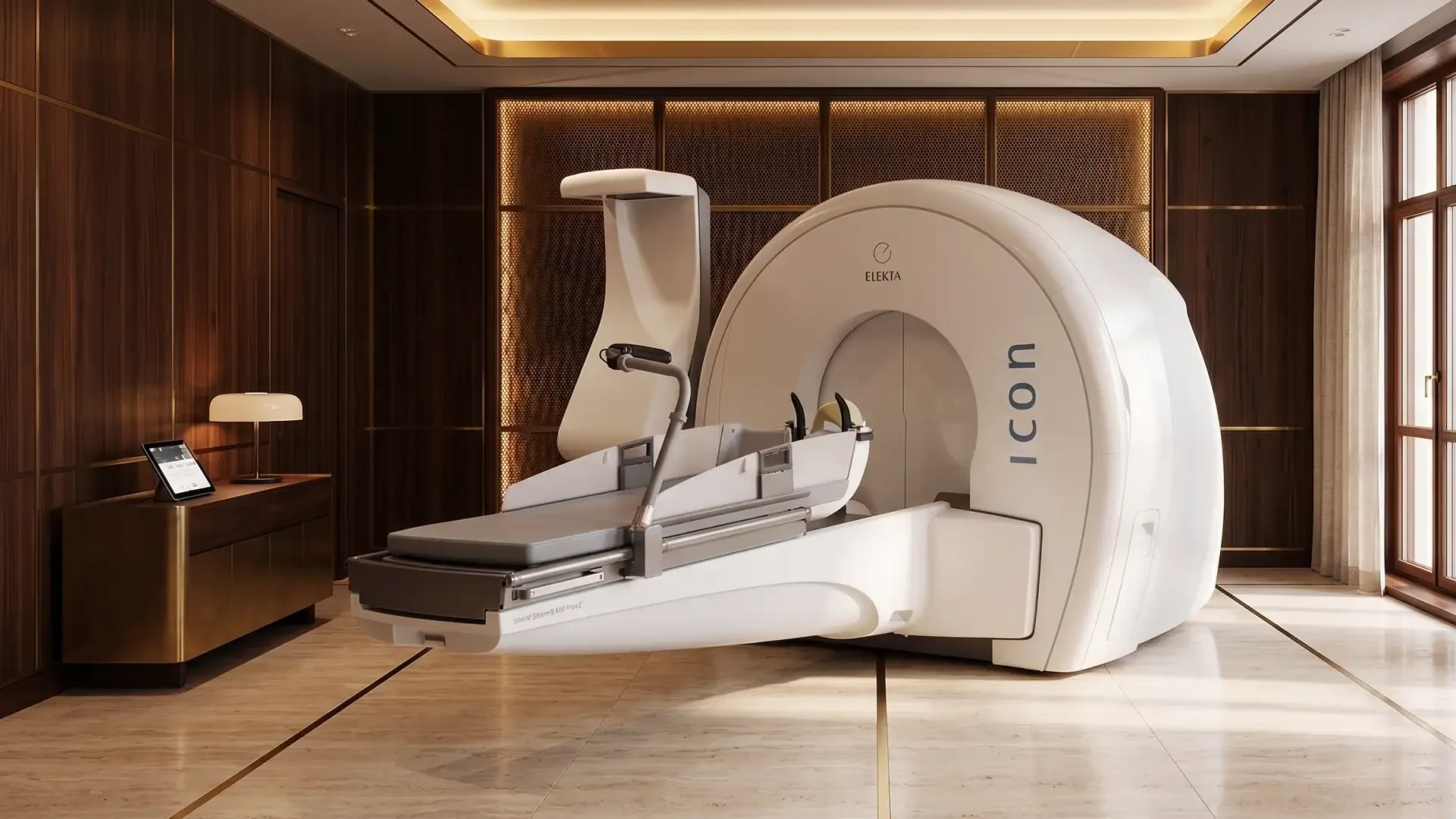
Complete microsurgical resection is curative for sporadic hemangioblastomas. For small, deep, or multiple lesions, Gamma Knife radiosurgery offers an excellent alternative with high tumour control rates. Istanbul provides access to expert neurosurgical care for both sporadic and VHL-associated hemangioblastomas at a fraction of Western costs.

Treatment Options for Hemangioblastoma
View All ProceduresSymptoms of Hemangioblastoma
Presenting symptoms depend on tumour location. Cerebellar hemangioblastomas produce headache, nausea, vomiting, gait ataxia, dysmetria, and nystagmus — classic posterior fossa symptoms often progressing over weeks to months as the associated cyst enlarges. Spinal hemangioblastomas cause back pain, sensory disturbance, weakness, and sphincter dysfunction corresponding to the level of involvement. Brainstem hemangioblastomas present with cranial nerve deficits, long tract signs, and potentially life-threatening respiratory compromise. In VHL patients, symptoms may be multifocal due to simultaneous lesions at multiple CNS levels, and the diagnosis is often already known from genetic screening.
Diagnostic Pathways
MRI with gadolinium is the imaging modality of choice. Hemangioblastomas appear as well-circumscribed, intensely enhancing mural nodules, frequently with a large non-enhancing peritumoural cyst. The cyst wall does not typically enhance, distinguishing hemangioblastomas from other cystic tumours. Digital subtraction angiography demonstrates the characteristic dense, well-circumscribed tumour blush with prominent feeding arteries and early draining veins. Screening for VHL disease is mandatory in all patients with hemangioblastoma — including fundoscopic examination for retinal haemangioblastomas, abdominal imaging for renal cell carcinoma and phaeochromocytoma, and genetic testing for VHL germline mutations.
Advanced Treatment Options at Vellum Select
Microsurgical Resection
Complete microsurgical resection is curative for sporadic hemangioblastomas. The tumour is well-circumscribed and does not invade surrounding brain, allowing for a clean plane of dissection. Pre-operative embolisation may be used for large vascular tumours to reduce intraoperative blood loss.
Gamma Knife Radiosurgery
For small solid hemangioblastomas (under 3 cm), deep-seated lesions, residual tumour after surgery, or multiple VHL-associated lesions, Gamma Knife Radiosurgery in Turkey achieves tumour control rates of 85–90 per cent at five years. The non-invasive approach is particularly valuable in VHL patients who face a lifetime of multiple treatments.
To discuss your hemangioblastoma diagnosis with Prof. Dr. Türker Kılıç, view his profile or contact Vellum Select to arrange a consultation.
Related Articles

Is Gamma Knife Suitable for Urgent Cases? An Honest Clinical Review
Gamma Knife radiosurgery is not designed for hyper-acute neurosurgical emergencies that require immediate physical decompression. Because focused radiation halts cellular division and shrinks lesions over several months, true emergencies with brainstem compression demand open surgery, whereas subacute, time-sensitive cases benefit immensely from thorough neurosurgical evaluation.
Gamma Knife vs. Open Brain Surgery: A Clinical Comparison
Yes, Gamma Knife radiosurgery is a highly effective, non-invasive alternative to open brain surgery for specific deep-seated brain tumors, AVMs, and neuralgias. While open surgery is required for large tumors causing immediate intracranial pressure, Gamma Knife offers sub-millimeter precision without incisions, general anesthesia, or prolonged ICU stays.

The Real Cost of Medical Treatment in Turkey: A Price Comparison Guide (2026)
How much does medical treatment in Turkey actually cost? This comprehensive price guide compares dental veneers, implants, rhinoplasty, and neurosurgery costs in Turkey vs. the UK and Europe, explaining the structural reasons behind the savings.

Is Turkey Safe for Medical Tourism? An Honest Guide for European Patients
European patients consistently ask the same question before booking: is Turkey actually safe? This guide answers directly, with facts about medical accreditation, city safety, patient rights, and how to identify a clinic you can trust.