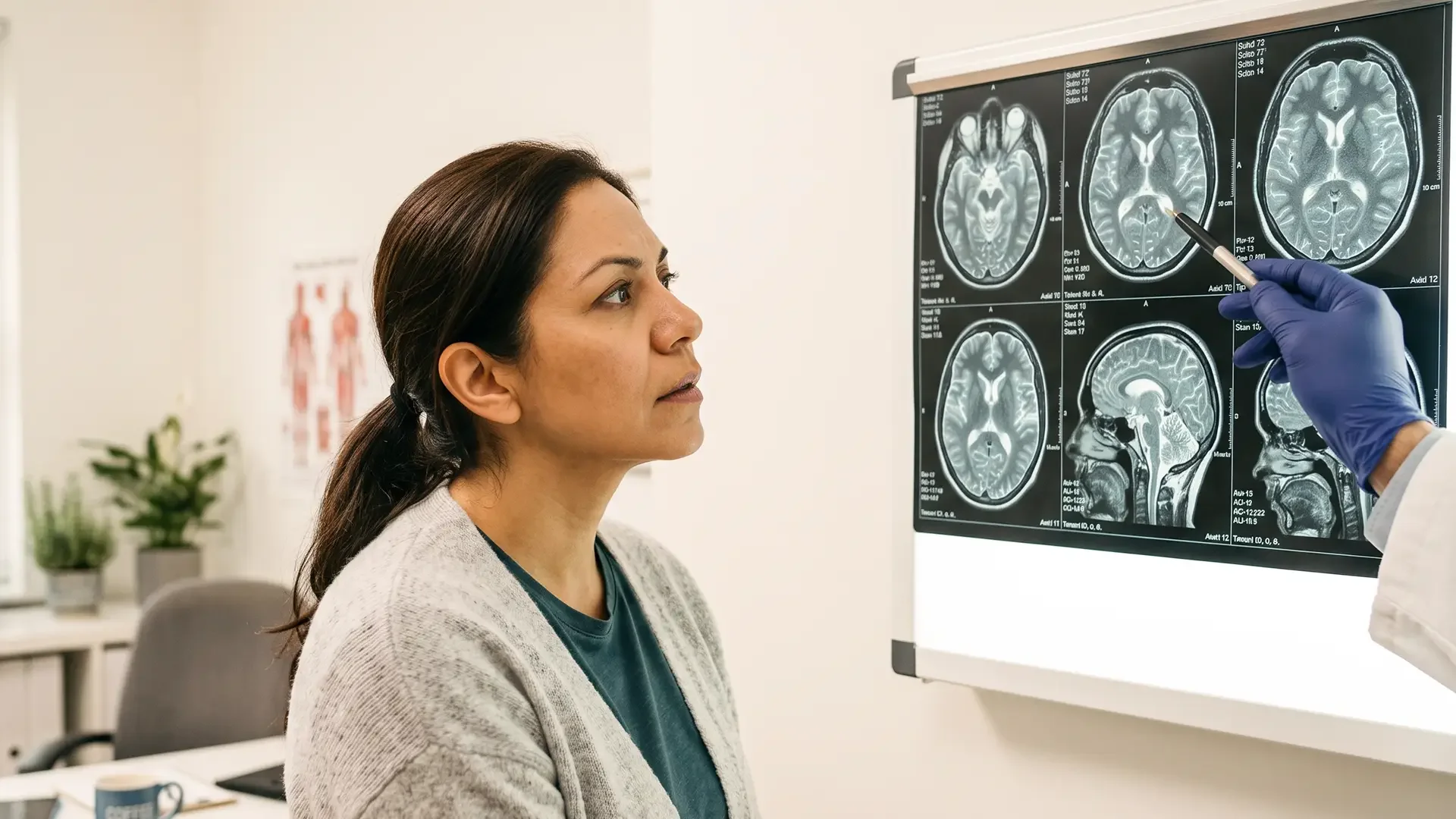
European patients consistently ask the same question before booking: is Turkey actually safe? This guide answers directly, with facts about medical accreditation, city safety, patient rights, and how to identify a clinic you can trust.
The Question Deserves a Straight Answer
Millions of European patients travel to Turkey for medical treatment every year. The question "is it safe?" is reasonable and worth addressing directly, not with reassurance, but with facts.
The honest answer: Turkey is a safe destination for medical tourism if you choose the right provider. That qualifier matters. The risks in Turkish medical tourism are not primarily about the country; they are about provider selection. The same is true in Germany, the UK, and Spain.
Turkey's Medical Accreditation: What It Actually Means
Turkey has a significant number of JCI-accredited (Joint Commission International) hospitals. This is frequently cited in medical tourism content, and the number is accurate, but it needs context to be genuinely useful.
Germany and the United Kingdom operate under their own rigorous domestic regulatory frameworks: the Care Quality Commission (CQC) in the UK, and the KTQ system in Germany. Hospitals in those countries do not seek JCI certification because they are already subject to mandatory national oversight that serves the same function. Turkish private hospitals, by contrast, pursue JCI accreditation partly as a signal to international patients that they meet internationally recognised standards. The certification is real and meaningful; it is simply not a like-for-like comparison with countries that have equivalent domestic systems.
What JCI accreditation does confirm, when verified independently, is that a hospital has met recognised standards across:
- Infection control and surgical safety protocols
- Patient rights and informed consent processes
- Medication management and clinical record standards
- Emergency and critical care capabilities
- Staff qualifications and ongoing training
This is not a tourism marketing statistic. It is a verifiable, publicly searchable accreditation. You can confirm any hospital's JCI status directly on the Joint Commission International website.
What Does "Safe" Actually Mean in This Context?
When European patients ask if Turkey is safe, they are usually asking several distinct questions at once:
- Is the country politically stable enough to travel to?
- Are the hospitals equipped and hygienic?
- Are the doctors properly qualified?
- Do patients have legal rights if something goes wrong?
- Is Istanbul a safe city to visit?
Each deserves a direct answer.
Country Stability and Travel Safety
Turkey is a NATO member state and a G20 economy. Istanbul, where virtually all medical tourism takes place, is one of the world's most visited cities, with over 20 million international tourists per year. The private hospitals are concentrated in the European districts: Şişli, Levent, Beşiktaş, and Nişantaşı, all of which function as a modern European capital city in every practical sense.
The UK Foreign Office, German Auswärtige Amt, and other European foreign ministries permit and facilitate travel to Istanbul for business and tourism. Most EU citizens travel to Turkey without a visa. UK nationals have also been able to enter visa-free since March 2020, for stays of up to 90 days within a 180-day period. No e-visa or prior application is required.
Like any major city, Istanbul has areas that require normal urban awareness. The medical districts are not among them.
Hospital Infrastructure and Hygiene Standards
JCI-accredited private hospitals in Istanbul are modern facilities, built or substantially renovated within the last 15 20 years. They operate to international infection control standards, use internationally sourced equipment, and conduct surgery in theatres that meet the same technical specifications as comparable Western European hospitals.
The Turkish Ministry of Health mandates infection surveillance, mandatory reporting of hospital-acquired infections, and regular facility inspections for all licensed hospitals. Private hospitals also have a commercial incentive rooted in international patient reputation to maintain consistent standards.
This is materially different from some lower-cost markets in global medical tourism. Turkey has a functioning national healthcare regulatory system with genuine enforcement capacity. It is not an unregulated market.
Surgeon Qualifications: How the Turkish Medical System Works
Turkish medical education follows a 6-year undergraduate medical programme, followed by specialist training through a highly competitive national examination (TUS). Surgeons obtain a specialist diploma after a further 4 6 years of supervised residency training.
Many leading Turkish surgeons have trained internationally at institutions in the United States, Germany, Austria, and the United Kingdom, and hold international board certifications alongside their Turkish credentials. This is particularly common in neurosurgery, oncology, and complex reconstructive surgery, where international fellowship training is standard for senior practitioners.
Turkish surgeons also publish internationally peer-reviewed research. It is both reasonable and recommended to verify any surgeon's credentials, publication record, and international affiliations before committing to treatment. Reputable clinics and curation services make this information available transparently.
Patient Rights in Turkey
Turkey has formal patient rights legislation under the Turkish Patient Rights Regulation (Hasta Hakları Yönetmeliği), covering:
- The right to complete and accurate medical information
- Informed consent requirements before any procedure
- Confidentiality of medical records
- The right to seek a second opinion
- The right to refuse treatment at any stage
- Complaint and compensation mechanisms
All accredited hospitals are required by law to have patient rights offices. Most Istanbul hospitals serving international patients have dedicated international patient coordinators who assist with communication, documentation, and any concerns that arise during a patient's stay.
Where the Real Risk Lies
Medical complications can occur anywhere: in Turkey, Germany, the UK, and the United States. The specific risk in medical tourism is not the country. It is the following factors, which require careful management regardless of destination:
- Choosing price over quality. The lowest-cost option in any medical tourism destination is priced that way because something has been reduced: surgeon experience, implant quality, aftercare provision, or facility standards. This applies equally in Istanbul, Antalya, and Budapest.
- Inadequate pre-operative assessment. Reputable facilities require comprehensive pre-operative evaluation: blood work, imaging, and clinical consultation. Any clinic offering a firm treatment quote without reviewing your medical history is a warning sign.
- Unrealistic outcome expectations. Any surgeon who guarantees a specific result is not operating ethically. Outcomes vary based on individual anatomy, healing response, and post-operative compliance.
- Poor continuity of care on return home. A responsible provider ensures you leave with full medical documentation in English that your home GP or specialist can use to continue your care.
These risks are manageable through careful provider selection. They are not inherent to Turkey as a country.
How to Identify a Clinic You Can Trust
Before committing to any provider, verify the following independently:
- Hospital JCI accreditation. Confirm directly at jointcommissioninternational.org, not from the clinic's own marketing materials.
- Surgeon credentials. Full name, specialist diploma, international training history, and board membership should be publicly verifiable. If they are not, ask directly and expect a clear answer.
- Case volume. For surgical procedures, volume correlates directly with outcome quality. A surgeon performing 500 procedures per year has a categorically different skill set than one performing 50.
- Transparent pricing. What exactly is included? Anaesthesia, accommodation, post-operative consultations, and revision policy should be explicitly stated in writing.
- English-language documentation. Your home doctor needs to understand your surgical report. Confirm this will be provided before you travel.
- Independent patient reviews. Testimonials on clinic websites are curated. Search independently: patient forums, expat communities, and verified review platforms give a more accurate picture.
The Vellum Select Standard
Vellum Select does not work with every clinic or surgeon in Turkey. Our network is limited to practitioners with international board certification, a minimum of 15 years of specialist experience, and a verifiable track record of treating international patients, all operating within JCI-accredited facilities.
When you work with Vellum Select, the clinical vetting has already been completed. You receive detailed surgeon profiles, a full pre-operative consultation before any financial commitment, and comprehensive English-language documentation throughout your treatment journey.
This is not a guarantee that everything will go exactly as planned; medicine does not work that way, and any provider who implies otherwise is not being honest with you. It is a guarantee that you are working with qualified practitioners in properly regulated facilities, which is the irreducible foundation of safe medical travel.
Frequently Asked Questions
Do I need a visa to travel to Turkey from Europe?
Most EU citizens can travel to Turkey visa-free for stays up to 90 days. UK nationals have also been able to enter without a visa since March 2020, for stays of up to 90 days within a 180-day period. No prior application is required, though entry requirements can change, so confirm current rules with your country's consulate before you travel.
Is Istanbul safe for solo international travellers?
Istanbul is one of the world's most visited cities and is broadly safe for solo international visitors. Normal urban awareness applies, the same precautions you would take in London, Paris, or Barcelona. The European districts where private hospitals are located are well-served, well-lit, and experienced in welcoming international visitors.
What happens if something goes wrong during my treatment?
All licensed Turkish hospitals carry compulsory medical liability insurance. In the event of a complication, patients have recourse through the hospital's patient rights office, the Turkish Patients' Rights Association, and, in serious cases, Turkish civil courts. This is a functioning legal framework, not a theoretical right.
Can I trust the qualifications of Turkish doctors?
Yes, when you verify them. Turkish specialist training is rigorous and internationally recognised. Many leading Turkish surgeons hold dual qualifications, Turkish and international, and have trained at major European or American institutions. Verify specific credentials independently rather than relying on assumptions in either direction.
What about follow-up care when I return home?
This is a critical practical consideration. Ensure your clinic provides complete English-language medical documentation: operative report, pathology results if applicable, implant records, discharge summary, and medication list. Share this with your home GP immediately on return. Vellum Select patients receive this documentation as standard, facilitated by our patient coordination team.
The Bottom Line
Turkey is a safe destination for medical tourism. The country's leading private hospitals are internationally accredited, its surgeons are formally qualified and frequently internationally trained, and its patient rights framework is active and enforceable.
The condition attached to that conclusion is not about Turkey. It is about provider selection. Choose a JCI-accredited facility, verify your surgeon's credentials independently, and work with a curation service that applies consistent, transparent standards. Do that, and Turkey offers access to genuinely world-class medical care at a fraction of Western European prices.
If you are evaluating treatment in Turkey and want to discuss your specific case, contact our team. We will tell you honestly whether Turkey is the right option for your situation, and if it is, we will connect you with the right specialist.