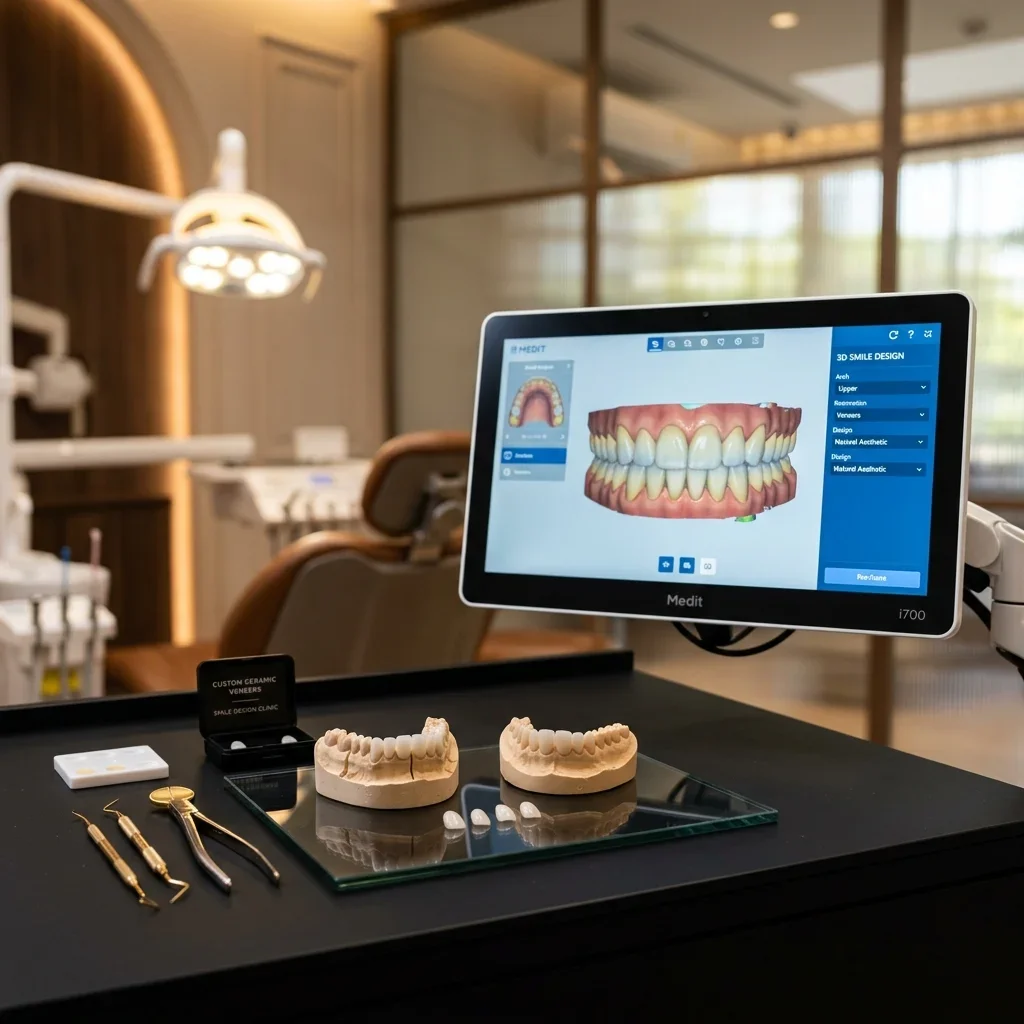
Dental veneers are the most sought-after cosmetic dentistry treatment in Turkey, but the path to a perfect smile has hidden realities. This honest guide reveals the risks of over-preparation, how to choose the right materials, and the truth behind 'Hollywood Smile' marketing.
Every year, thousands of patients travel to Istanbul, Antalya, and Izmir in search of the perfect smile. The appeal is obvious: state-of-the-art dental clinics, highly qualified specialists, and prices that are 50% to 70% lower than in the UK, Europe, or North America. A full smile makeover that would cost £20,000 in London can often be completed in Turkey for £6,000.
However, the explosive growth of dental tourism has also led to a rise in aggressive marketing, misleading terminology, and patients returning home with permanent dental issues. If you are considering dental veneers in Turkey, you need more than a price list. Here is the honest truth about what you must evaluate before booking your trip.
1. The Crucial Distinction: Crowns vs. Veneers
The single most important concept to grasp before booking any cosmetic dental work is the structural difference between a veneer and a crown, and understanding when each is actually the right tool for the job.
Laminate Veneers: These are ultra-thin ceramic shells (typically 0.3mm to 0.7mm thick) bonded strictly to the front surface of the tooth. Because preparing the tooth requires removing only a microscopic layer of enamel, it is the gold standard for conservative, tissue-preserving aesthetics.
Full Dental Crowns: These are 360-degree caps that encase the entire tooth, which requires reducing a significant portion of the natural tooth structure. To be clear: crowns are not inherently "bad." If a tooth is heavily restored, severely broken down, or significantly crooked, a full crown is often the most medically sound, structurally durable choice a dentist can make.
The Pitfall
The issue arises when high-volume clinics treat full crowns as a "one-size-fits-all" default for perfectly healthy teeth.
Why does this happen? Because true laminate veneers require a master-level degree of precision, both from the dentist’s hands and the boutique ceramic lab. If a clinic's standard of care is built on speed rather than high-end craftsmanship, crowns become the safer, faster default for them to guarantee a straight-looking result.
Your anatomy should dictate your treatment plan, never a clinic’s preferred workflow. When exploring treatment abroad, seek out platforms that champion tissue preservation. Curated platforms like Vellum Select, for instance, have multiple specialized doctors review your diagnostics before matching you, ensuring your treatment plan is built around the health of your teeth, rather than a standard package.
2. Material Selection: The Translucency Secret
Not all dental ceramics are created equal. The material chosen directly dictates how natural your new teeth will look under different light conditions.
- Lithium Disilicate (IPS e.max): The gold standard for veneers. It matches the light-reflecting properties, translucency, and depth of natural tooth enamel with incredible accuracy.
- Zirconium (Zirconia): An extremely strong metal-free oxide ceramic. Because of its strength, it is excellent for posterior (back) teeth, bridges, or patients who grind their teeth. However, standard zirconia is highly opaque. If used for front veneers, it can produce a flat, chalky, “piano-key” white look that screams artificial.
If a clinic offers an extremely cheap flat-rate package for “20 Zirconium Veneers,” they are likely fitting full zirconia crowns. For a truly natural smile, e.max or handcrafted feldspathic porcelain veneers should be the primary choice for your front teeth.
3. Why the Ceramist Matters as Much as the Clinic
Most patients spend hours researching clinics and dentists, but they completely ignore the laboratory. In cosmetic dentistry, the dentist prepares the teeth and takes the impressions, but the **dental ceramist** in the lab is the artist who actually handcrafts the shapes, micro-textures, and color gradations of your veneers.
In mass-production clinics, veneers are milled rapidly using CAD/CAM software and fitted without customized hand-characterization. This leads to generic, uniform teeth that lack the subtle imperfections of a natural smile.
The Ideal Setup: The best results occur when the clinician has an in-depth understanding of laboratory work or plays a direct role in the fabrication. For example, Dr. Nesrin Sönmez holds a PhD in prosthodontics and is also a trained dental ceramist. Because she designs, refines, and hand-crafts the restorations herself, there is no interpretation gap between the dentist and the lab. This level of curation is what separates a premium, lifelike smile from a generic dental package.
4. Cost Comparison: What is a Realistic Budget?
To help you evaluate pricing, here is a realistic breakdown of the average cost per veneer in 2026:
| Material | UK Cost (per tooth) | Turkey Cost (per tooth) | Typical Savings |
|---|---|---|---|
| Porcelain (Feldspathic) | £800 – £1,200 | £200 – £400 | ~65-70% |
| Lithium Disilicate (e.max) | £600 – £1,000 | £180 – £350 | ~65% |
| Zirconium (Layered) | £500 – £800 | £150 – £300 | ~60% |
| Composite Resin | £250 – £450 | £80 – £150 | ~65% |
If you receive a quote that is significantly lower than these averages (e.g., £90 per veneer for e.max), you should be highly skeptical. Premium raw materials from global brands like Ivoclar Vivadent have fixed supply chain costs; ultra-low pricing always indicates cut corners in sterilization, laboratory quality, or clinical time.
5. Checklist: Before You Book Your Dental Trip
To protect your dental health and ensure a premium result, go through this checklist with any clinic you evaluate:
- Verify the Specialist: Ensure the doctor performing your treatment is a registered **Prosthodontist** or **Cosmetic Dentist** with postgraduate training, not a general dentist.
- Review the Plan: Ask: “Are these full crowns or conservative veneers, and how many millimeters of enamel will be removed?” Get the answer in writing.
- Check the Material Brands: Ask for the exact brand name of the ceramic (e.g., Ivoclar IPS e.max). Avoid clinics that use vague terms like “Swiss Material” or “German Zirconium” without specifying the manufacturer.
- Ask for Mock-Ups: Ensure the clinic provides a “wax-up” or temporary “mock-up” phase, allowing you to test-drive and approve the smile design in your mouth before any permanent tooth preparation begins.
- Inquire About Aftercare & Complications: What happens if a veneer chips after you return home? Who covers the cost of revision? A trustworthy facilitator or clinic will have a clear, written warranty and follow-up protocol.
Final Thoughts
Traveling to Turkey for dental veneers is an excellent way to achieve a world-class smile at a fraction of the cost, but only if you prioritize quality over cheap packages. By selecting a highly qualified prosthodontist, demanding conservative enamel preparation, and understanding the materials used, you can enjoy a beautiful, stable, and natural-looking smile for decades.
Medical disclaimer: This article is for informational purposes only and does not replace professional medical advice.