Dental Veneers in Turkey
FREE PRE-EVALUATION
Upload your Photos, X-Rays or MRI Reports to request analysis from a specialist.
Consultant Status: Online
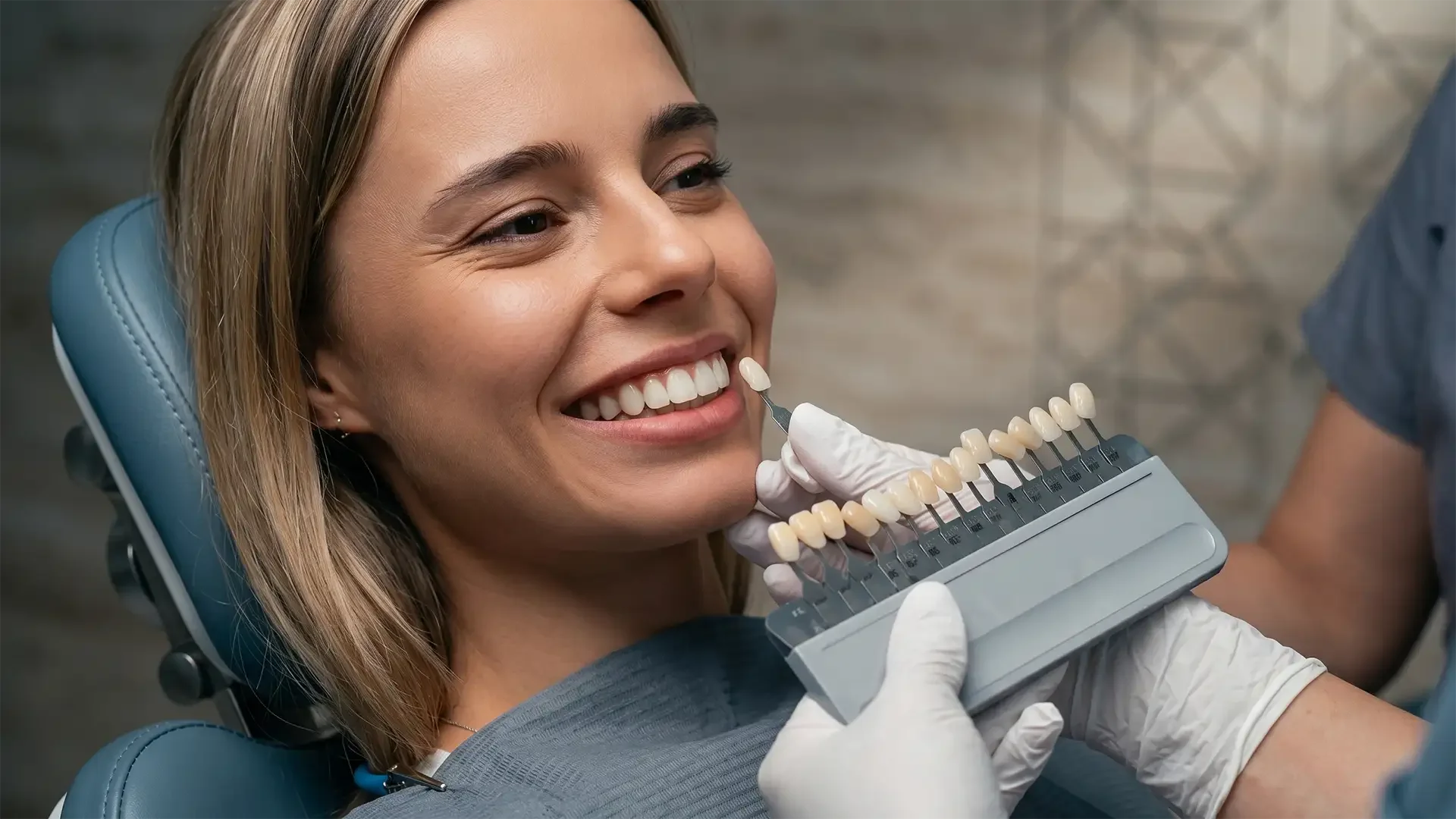
Dental veneers are the most requested cosmetic dental treatment by international patients travelling to Turkey, and for good reason. The combination of world-class cosmetic dentistry expertise, premium material availability, and pricing that is 50–70% lower than Western Europe has made Istanbul the global capital of veneer tourism.
However, veneers are only as good as the hands and eyes that design and place them. A veneer that fits poorly, matches incorrectly, or ignores the patient's facial proportions is worse than no veneer at all. Vellum Select curates dentists who treat veneers as precision craftsmanship rather than high-volume production.
Conditions This Treatment Addresses
Frequently Asked Questions
About Dental Veneers in Turkey
How much do veneers cost in Turkey?
Porcelain veneers in Turkey typically cost £200–£400 per tooth, compared to £800–£1,200 in the UK. For a full set of 16–20 veneers, patients can save £8,000–£15,000 compared to UK pricing, even after accounting for travel and accommodation.
How long do veneers last?
Porcelain and e.max veneers last 10–20+ years with proper care. Composite veneers last approximately 5–7 years. Longevity depends on oral hygiene, bite forces, and whether the patient grinds their teeth. Night guards are recommended for patients with bruxism.
Do veneers damage your teeth?
Veneer preparation removes a thin layer (0.3–0.7mm) of enamel — significantly less than a crown. This process is irreversible, which is why Vellum Select only works with dentists who take a conservative, minimal-preparation approach. No-prep veneers are available for suitable cases with zero enamel removal.
How many visits to Turkey do I need for veneers?
Most patients complete treatment in a single trip of 7–14 days. The first few days cover consultation, design approval, and tooth preparation. After a laboratory fabrication period of 5–10 days, the permanent veneers are bonded. Some patients split treatment across two shorter visits.
Will my veneers look natural?
With a skilled cosmetic dentist, veneers should be indistinguishable from natural teeth. The "fake" appearance associated with bad veneer work — overly white, uniform, bulky — is a design and fabrication failure, not a limitation of the technology. Dr. Sönmez's approach involves customising colour, translucency, and surface texture to match the patient's natural tooth characteristics and facial features.
Can I eat normally with veneers?
Yes. Once bonded, veneers function like natural teeth. You can eat, drink, and brush normally. Avoid using teeth to open packaging or bite into extremely hard objects (ice, hard candy, bone) — the same precautions that apply to natural teeth.
What happens if a veneer chips or breaks?
Individual veneers can be repaired or replaced without affecting adjacent restorations. Porcelain veneers rarely chip under normal use, but accidents can happen. Your dentist will advise on whether a repair or full replacement is appropriate.
What Are Dental Veneers?
Dental veneers are thin shells of ceramic or composite material bonded to the front surface of teeth to change their colour, shape, size, or alignment. They are the foundation of most smile makeover procedures and can transform a smile in as few as two clinical visits.
Veneers are used to correct discolouration that does not respond to whitening, chipped or worn teeth, minor misalignment or gaps between teeth, uneven tooth size or shape, and teeth that have lost their natural translucency.
Unlike crowns, which cover the entire tooth, veneers require minimal removal of tooth structure (typically 0.3–0.7mm from the front surface) preserving significantly more of the natural tooth.
Types of Dental Veneers
Porcelain (Feldspathic) Veneers
The gold standard for natural aesthetics. Handcrafted layer by layer by a dental ceramist, feldspathic porcelain veneers replicate the translucency, depth, and colour gradation of natural tooth enamel with unmatched fidelity. They are the thinnest veneer option and require the least tooth preparation. Their limitation is lower flexural strength compared to pressed or milled options, making them best suited to anterior (front) teeth.
Lithium Disilicate (e.max) Veneers
The most popular all-ceramic veneer material worldwide. E.max offers an excellent balance of aesthetics and strength, significantly stronger than feldspathic porcelain while still providing natural-looking translucency. E.max veneers can be pressed or milled (CAD/CAM) and are suitable for both front and premolar teeth.
Zirconium Veneers
The strongest ceramic option, used when durability is the primary concern, patients with bruxism (teeth grinding), heavy bite forces, or extensive cases covering both anterior and posterior teeth. Modern layered zirconium achieves good aesthetics, though it does not match the translucency of feldspathic or e.max ceramics. Read more about Zirconium Crowns in Turkey →
No-Prep / Minimal-Prep Veneers
Ultra-thin veneers (0.2–0.3mm) that require little or no removal of existing tooth structure. Suitable for patients who want to add volume or length to teeth, close gaps, or improve colour without irreversible preparation. Not appropriate for all cases, the dentist must assess whether the patient's tooth alignment and bite allow for additive treatment.
Composite Veneers
Built directly onto the teeth using composite resin in a single visit. More affordable and reversible, but with a shorter lifespan (5–7 years vs. 10–20+ years for porcelain) and less natural light transmission. Composite veneers can be a good option for younger patients or those wanting a trial before committing to porcelain.
Veneer Cost in Turkey vs. the UK and Europe
| Material | UK (per veneer) | Turkey (per veneer) | Savings |
|---|---|---|---|
| Porcelain (feldspathic) | £800–£1,200 | £200–£400 | ~65–70% |
| E.max | £600–£1,000 | £180–£350 | ~65% |
| Zirconium | £500–£800 | £150–£300 | ~60–65% |
| Composite | £250–£450 | £80–£150 | ~65% |
For a full smile makeover (typically 16–20 veneers), the savings can amount to £8,000–£15,000 compared to UK pricing, comfortably covering flights, accommodation, and the treatment itself.
The Veneer Process: What to Expect
Visit 1: Consultation & Design (Day 1–2)
Your dentist conducts a comprehensive examination including digital impressions (intraoral scanning), photographs, and X-rays. Using digital smile design (DSD) software, the ideal veneer shape, proportion, and colour are mapped to your facial features, lip line, gum line, face width, and smile dynamics. A mock-up (temporary preview) may be placed so you can see and approve the planned result before any preparation begins.
Visit 1: Tooth Preparation (Day 2–3)
If you approve the design, a thin layer of enamel (0.3–0.7mm) is removed from the front surface of each tooth to create space for the veneer. This is performed under local anaesthesia and is painless. Temporary veneers are placed to protect the prepared teeth and give you a functional preview while the permanent veneers are fabricated.
Laboratory Fabrication (5–10 days)
Your digital impressions and design specifications are sent to the dental laboratory. Premium ceramists handcraft each veneer to match the approved design, colour, and translucency targets. This is where the quality difference between clinics becomes most apparent: a mass-production lab and a master ceramist produce fundamentally different results.
Visit 2: Bonding (Day 7–14)
The temporary veneers are removed and the permanent ceramics are tried in, checked for fit, colour, and bite alignment, and then permanently bonded using adhesive resin cement. Final polishing and occlusal adjustments are made.
Your Dentist: Dr. Nesrin Sönmez
Vellum Select's curated cosmetic dentist for veneers is Dr. Nesrin Sönmez, a prosthodontist, cosmetic dentist, and dental ceramist practising in Nişantaşı, Istanbul.
What makes Dr. Sönmez exceptional in veneer dentistry is that she is both the clinician who designs and prepares the teeth and the ceramist who handcrafts the final restorations. This eliminates the interpretation gap between dentist and laboratory that is the single most common source of veneer results that look technically correct but feel generic or unnatural.
She holds a PhD in prosthodontics from Istanbul University, with doctoral research specifically on CAD/CAM ceramic material properties, meaning her material selection for each patient is evidence-based, not trend-driven.
View Dr. Sönmez's full profile →
How to Choose the Right Veneer Material
The right material depends on four factors:
Aesthetic priority: If maximum natural appearance is the goal and the teeth are anterior (front), feldspathic porcelain or e.max is preferred. Zirconium excels in strength but offers less translucency.
Tooth condition: Heavily discoloured or structurally compromised teeth may benefit from the opacity of zirconium to mask the underlying colour. Healthy teeth with minor cosmetic issues are ideal candidates for ultra-thin feldspathic or no-prep veneers.
Bite forces: Patients who grind their teeth (bruxism) or have a heavy bite need the fracture resistance of zirconium or e.max. Feldspathic porcelain is more fragile under lateral forces.
Budget and longevity: Porcelain and e.max veneers typically last 10–20+ years with proper care. Composite veneers are more affordable but need replacement every 5–7 years. Over a 20-year horizon, porcelain often proves more cost-effective.
Your Vellum Select dentist will recommend the optimal material based on clinical assessment, not a predetermined menu.
Journey to Recovery
Visit 1: Consultation & Design (Day 1–2)
Your dentist conducts a comprehensive examination including digital impressions (intraoral scanning), photographs, and X-rays. Using digital smile design (DSD) software, the ideal veneer shape, proportion, and colour are mapped to your facial features, lip line, gum line, face width, and smile dynamics. A mock-up (temporary preview) may be placed so you can see and approve the planned result before any preparation begins.
Visit 1: Consultation & Design (Day 1–2)
Your dentist conducts a comprehensive examination including digital impressions (intraoral scanning), photographs, and X-rays. Using digital smile design (DSD) software, the ideal veneer shape, proportion, and colour are mapped to your facial features, lip line, gum line, face width, and smile dynamics. A mock-up (temporary preview) may be placed so you can see and approve the planned result before any preparation begins.
Visit 1: Tooth Preparation (Day 2–3)
If you approve the design, a thin layer of enamel (0.3–0.7mm) is removed from the front surface of each tooth to create space for the veneer. This is performed under local anaesthesia and is painless. Temporary veneers are placed to protect the prepared teeth and give you a functional preview while the permanent veneers are fabricated.
Visit 1: Tooth Preparation (Day 2–3)
If you approve the design, a thin layer of enamel (0.3–0.7mm) is removed from the front surface of each tooth to create space for the veneer. This is performed under local anaesthesia and is painless. Temporary veneers are placed to protect the prepared teeth and give you a functional preview while the permanent veneers are fabricated.
Laboratory Fabrication (5–10 days)
Your digital impressions and design specifications are sent to the dental laboratory. Premium ceramists handcraft each veneer to match the approved design, colour, and translucency targets. This is where the quality difference between clinics becomes most apparent: a mass-production lab and a master ceramist produce fundamentally different results.
Laboratory Fabrication (5–10 days)
Your digital impressions and design specifications are sent to the dental laboratory. Premium ceramists handcraft each veneer to match the approved design, colour, and translucency targets. This is where the quality difference between clinics becomes most apparent: a mass-production lab and a master ceramist produce fundamentally different results.
Visit 2: Bonding (Day 7–14)
The temporary veneers are removed and the permanent ceramics are tried in, checked for fit, colour, and bite alignment, and then permanently bonded using adhesive resin cement. Final polishing and occlusal adjustments are made.
Visit 2: Bonding (Day 7–14)
The temporary veneers are removed and the permanent ceramics are tried in, checked for fit, colour, and bite alignment, and then permanently bonded using adhesive resin cement. Final polishing and occlusal adjustments are made.