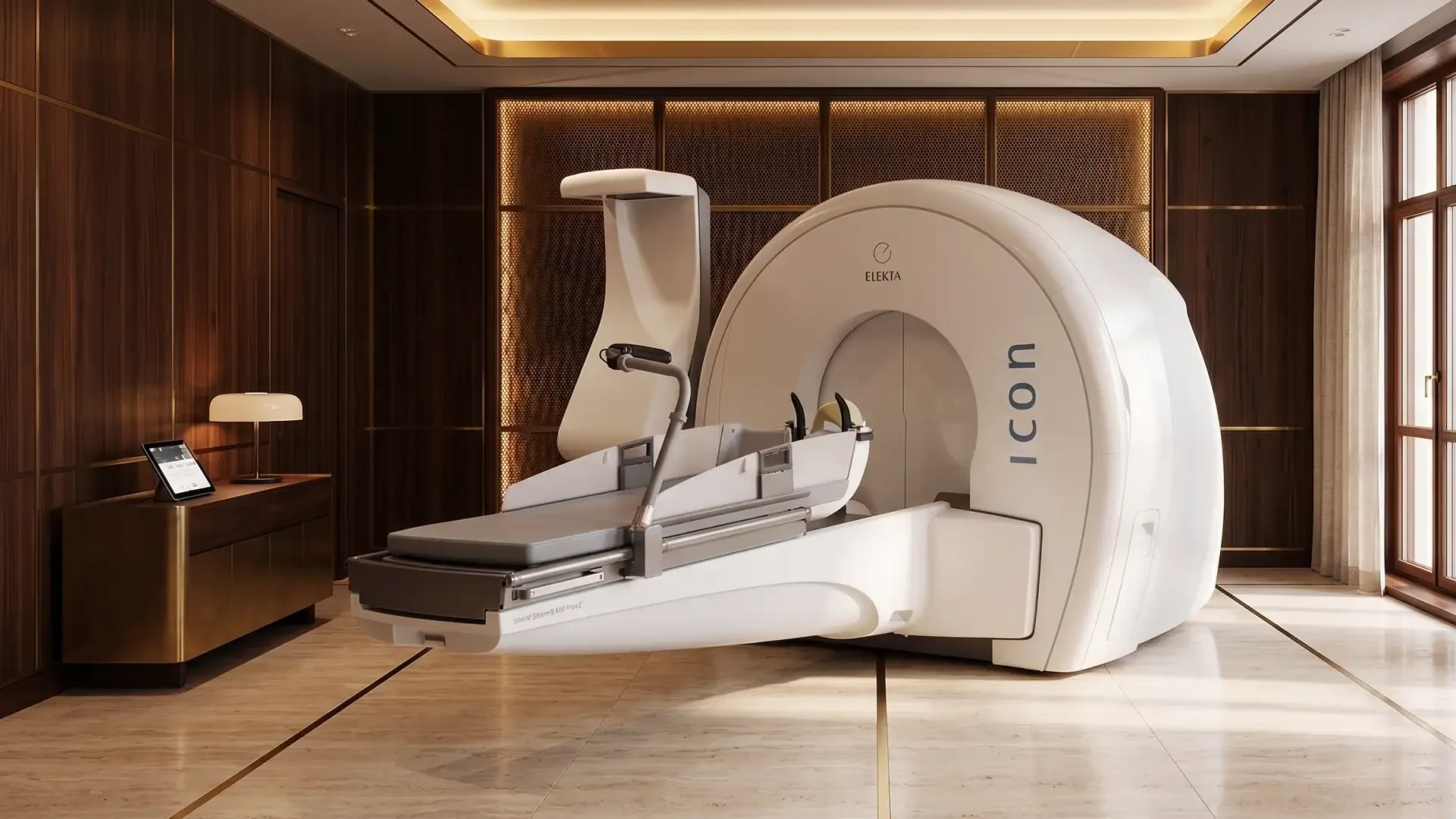
Yes, Gamma Knife radiosurgery is a highly effective, non-invasive alternative to open brain surgery for specific deep-seated brain tumors, AVMs, and neuralgias. While open surgery is required for large tumors causing immediate intracranial pressure, Gamma Knife offers sub-millimeter precision without incisions, general anesthesia, or prolonged ICU stays.
For decades, a brain tumor diagnosis inevitably meant preparing for an open craniotomy—a major surgical procedure involving incisions, skull bone removal, and weeks of grueling recovery in an intensive care unit. Today, advances in stereotactic radiosurgery have created a paradigm shift in neurosurgery.
Patients evaluating Gamma Knife Treatment in Turkey now have access to a non-invasive procedure that targets deep-seated brain conditions with sub-millimeter precision, entirely without a scalpel. But how does this technology compare to traditional neurosurgery? Below is an evidence-based, clinical comparison of Gamma Knife Radiosurgery and Open Brain Surgery to help you understand which pathway aligns with your specific diagnosis.
What is Traditional Open Brain Surgery (Craniotomy)?
A craniotomy is the traditional surgical approach to treating brain tumors, vascular malformations, and traumatic brain injuries. Under general anesthesia, a neurosurgeon makes an incision in the scalp, temporarily removes a section of the skull (bone flap), and uses micro-neurosurgical tools to physically remove the tumor or repair the blood vessel.
The Clinical Advantage: Open surgery provides immediate relief from mass effect (pressure on the brain caused by a large tumor). It is absolutely necessary for life-threatening, rapidly growing tumors larger than 3 to 4 centimeters, or tumors that are actively compressing critical structures and causing severe neurological deficits.
The Risks: Because it is highly invasive, patients face risks of infection, hemorrhage, damage to healthy surrounding tissue, and a prolonged recovery period lasting 4 to 8 weeks.
What is Gamma Knife Radiosurgery?
Despite its name, there is no blade involved in Gamma Knife Radiosurgery. It is an advanced form of stereotactic radiosurgery (SRS). Instead of a scalpel, the system uses 192 precisely focused beams of Cobalt-60 gamma radiation.
Individually, these beams are weak enough to pass harmlessly through healthy brain tissue. However, when all 192 beams intersect at the mathematically defined target—such as a meningioma or acoustic neuroma—their combined energy delivers a lethal dose of radiation to the cellular DNA of the lesion. This halts the tumor's growth or causes it to shrink over time.
The Clinical Advantage: It is the gold standard for lesions under 3 centimeters, particularly those located deep in the brain (like the brainstem or optic nerves) where open surgery would be catastrophically risky. It boasts a tumor control rate of over 90% for many benign tumors, matching the efficacy of open surgery but with near-zero mortality and morbidity rates.
Head-to-Head Comparison: Gamma Knife vs. Open Surgery
| Clinical Feature | Gamma Knife Radiosurgery | Traditional Open Surgery (Craniotomy) |
| Incision & Scarring | None | Required (scalp incision & bone flap) |
| Anesthesia | Local (for stereotactic frame) | General Anesthesia |
| Target Size Limit | Ideal for lesions < 3 cm | Capable of removing massive lesions (> 3 cm) |
| Immediate Effect | Gradual (DNA damage shrinks tumor over months) | Immediate physical removal and pressure relief |
| Hospital Stay | Outpatient (Discharged same day) | 3 to 7 days (Includes ICU monitoring) |
| Recovery Timeline | 24 to 48 hours | 4 to 8 weeks |
| Infection Risk | Zero | Standard surgical risks apply |
Condition-Specific Candidacy
Gamma Knife is not a universal replacement for open surgery; it is a highly specialized tool. Candidacy is determined by the specific pathology of the lesion:
-
Meningiomas: Benign tumors arising from the brain's lining. Small meningiomas respond exceptionally well to Gamma Knife, avoiding the need for invasive skull base surgery.
-
Metastatic Brain Tumors: Cancer that has spread from the lungs, breasts, or colon. Gamma Knife can target multiple metastatic lesions in a single session, sparing the patient whole-brain radiation.
-
Trigeminal Neuralgia: For this severe facial pain condition, Gamma Knife targets the trigeminal nerve root to block pain signals without opening the skull.
-
Arteriovenous Malformations (AVMs): For deeply embedded tangles of abnormal blood vessels, radiation causes the vessels to thicken and close off safely over time.
Why International Patients Choose Turkey for Neurosurgery
The decision to travel abroad for neurosurgery requires absolute trust in clinical excellence. Patients from the UK, Europe, and the Middle East consistently choose Istanbul for three primary reasons:
-
World-Class Surgical Expertise: Success in radiosurgery is dependent on the physicist and neurosurgeon designing the treatment map. Turkey is home to global pioneers in functional neurosurgery. Prof. Dr. Türker Kılıç, for example, pioneered the use of Gamma Knife in Turkey, having treated over 30,000 patients and establishing one of the most distinguished radiosurgery centers globally.
-
Uncompromising Facilities: High-end medical centers in Istanbul are Joint Commission International (JCI) accredited, ensuring rigorous international safety protocols, cutting-edge MRI technology, and luxurious patient comfort.
-
Transparent, Substantial Cost Savings: In the UK and US, private Gamma Knife treatment can easily exceed £20,000 to £35,000, often paired with agonizing waiting lists. In Turkey, identical state-of-the-art procedures are performed by internationally credentialed surgeons for roughly 60% less, with immediate scheduling.
(Medical disclaimer: This article is for informational purposes only and does not replace professional medical advice. Always consult a board-certified neurosurgeon with your MRI scans to determine your specific candidacy).