Glomus Jugulare
Glomus jugulare tumours are paragangliomas arising from the paraganglionic tissue of the jugular bulb at the skull base. These are highly vascular, slow-growing, usually benign tumours that progressively invade the temporal bone, compressing the lower cranial nerves (IX–XII) and adjacent neurovascular structures.
Understanding Glomus Jugulare Tumours
Glomus jugulare tumours originate within the jugular foramen — a narrow bony passage at the skull base through which the jugular vein, internal carotid artery, and cranial nerves IX, X, and XI pass. As the tumour grows, it expands the jugular foramen through bony erosion and extends intracranially into the cerebellopontine angle, compressing the brainstem and cerebellum. Despite being histologically benign in the vast majority of cases, the tumour's location at the crossroads of critical cranial nerves and major vessels makes its management exceptionally challenging.
The treatment landscape has shifted dramatically in favour of stereotactic radiosurgery as the primary modality. Gamma Knife offers excellent tumour control with minimal cranial nerve morbidity compared to microsurgical resection, which carries significant risk of new lower cranial nerve deficits. Istanbul provides access to expert Gamma Knife treatment for glomus jugulare tumours with outcomes comparable to the world's leading radiosurgery centres.

Treatment Options for Glomus Jugulare
View All ProceduresSymptoms of Glomus Jugulare Tumours
The most common presenting symptom is pulsatile tinnitus — a rhythmic whooshing sound synchronous with the heartbeat — caused by the high-flow vascular nature of the tumour. Conductive hearing loss from middle ear involvement is also common. As the tumour enlarges, lower cranial nerve deficits develop: dysphagia (swallowing difficulty) from glossopharyngeal and vagus nerve compression, hoarseness from recurrent laryngeal nerve involvement, shoulder weakness from spinal accessory nerve compression, and tongue atrophy from hypoglossal nerve involvement. Large tumours may produce vertigo, facial numbness, and cerebellar ataxia.
Diagnostic Pathways
High-resolution CT of the temporal bone demonstrates the characteristic moth-eaten bony erosion of the jugular foramen — the "irregular" pattern of bone destruction that distinguishes glomus jugulare from other skull base lesions. MRI with gadolinium shows the characteristic "salt and pepper" appearance on T1-weighted sequences, representing flow voids within the highly vascular tumour. MR angiography or digital subtraction angiography defines the tumour's blood supply, typically from the ascending pharyngeal artery. Formal audiometry quantifies conductive and sensorineural hearing loss. Lower cranial nerve assessment includes laryngoscopy for vocal cord function and swallowing evaluation.
Advanced Treatment Options at Vellum Select
Gamma Knife Radiosurgery
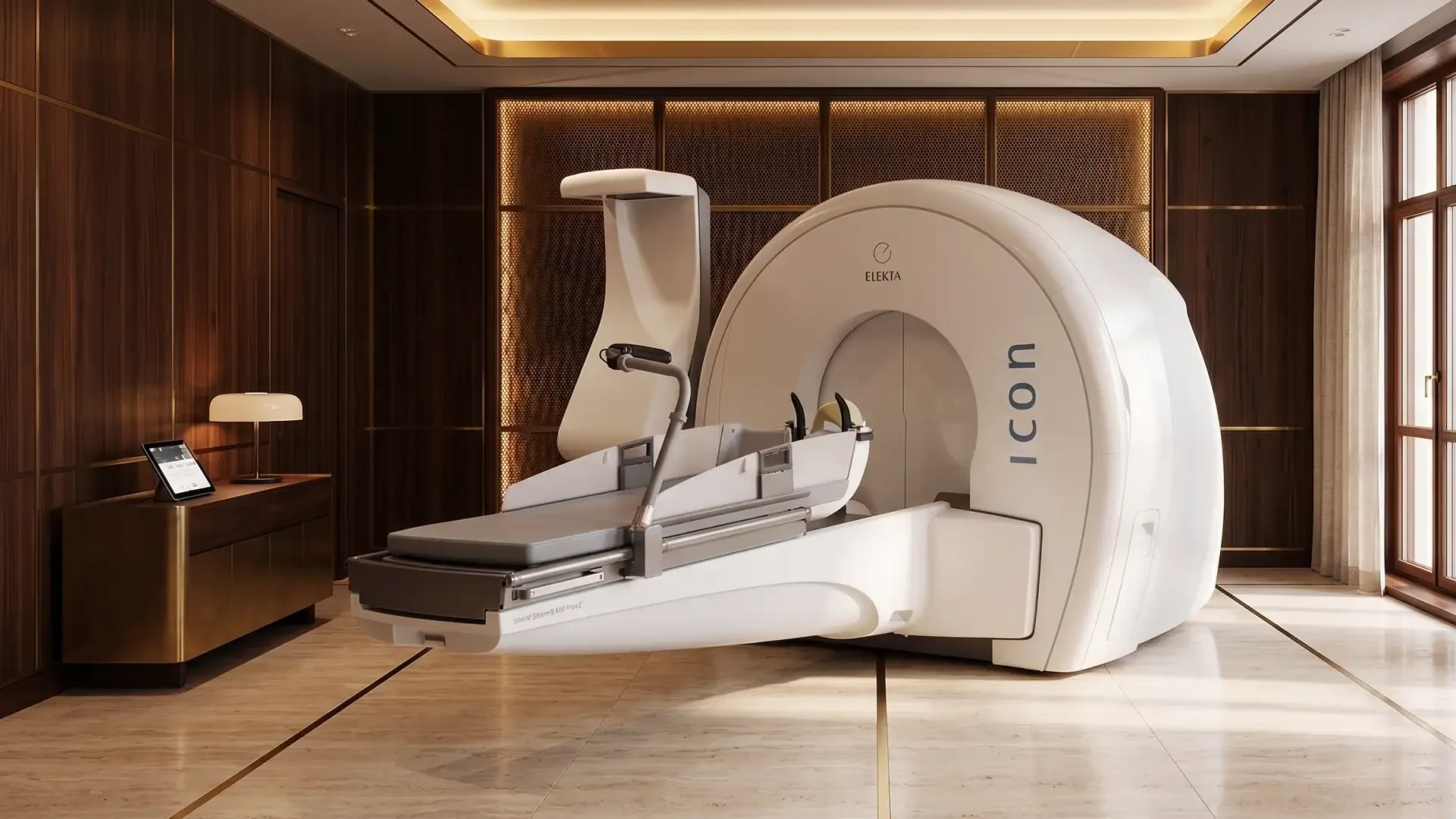
For small to medium-sized glomus jugulare tumours (under 3 cm intracranial component), Gamma Knife Radiosurgery in Turkey is the preferred first-line treatment. The highly conformal radiation delivery spares the cochlea and lower cranial nerves while achieving tumour control rates exceeding 90 per cent at five years. Unlike surgery, which carries a 30–40 per cent risk of new cranial nerve deficit, Gamma Knife preserves neurological function in over 95 per cent of patients. The procedure is performed as a single outpatient session with no incision, and international patients typically return home within 48 hours.
To discuss your glomus jugulare diagnosis with Prof. Dr. Türker Kılıç, view his profile or contact Vellum Select to arrange a consultation.
Related Articles

Is Gamma Knife Suitable for Urgent Cases? An Honest Clinical Review
Gamma Knife radiosurgery is not designed for hyper-acute neurosurgical emergencies that require immediate physical decompression. Because focused radiation halts cellular division and shrinks lesions over several months, true emergencies with brainstem compression demand open surgery, whereas subacute, time-sensitive cases benefit immensely from thorough neurosurgical evaluation.
Gamma Knife vs. Open Brain Surgery: A Clinical Comparison
Yes, Gamma Knife radiosurgery is a highly effective, non-invasive alternative to open brain surgery for specific deep-seated brain tumors, AVMs, and neuralgias. While open surgery is required for large tumors causing immediate intracranial pressure, Gamma Knife offers sub-millimeter precision without incisions, general anesthesia, or prolonged ICU stays.

The Real Cost of Medical Treatment in Turkey: A Price Comparison Guide (2026)
How much does medical treatment in Turkey actually cost? This comprehensive price guide compares dental veneers, implants, rhinoplasty, and neurosurgery costs in Turkey vs. the UK and Europe, explaining the structural reasons behind the savings.

Is Turkey Safe for Medical Tourism? An Honest Guide for European Patients
European patients consistently ask the same question before booking: is Turkey actually safe? This guide answers directly, with facts about medical accreditation, city safety, patient rights, and how to identify a clinic you can trust.