Movement Disorder Surgery in Turkey
FREE PRE-EVALUATION
Upload your Photos, X-Rays or MRI Reports to request analysis from a specialist.
Consultant Status: Online

Movement disorders are a group of neurological conditions characterised by abnormal involuntary movements, impaired voluntary movements, or both. While Parkinson's disease is the most well-known, the spectrum includes essential tremor, dystonia, Huntington's disease, chorea, tics, and myoclonus, each with distinct mechanisms and treatment approaches.
When medication fails to adequately control symptoms, deep brain stimulation (DBS) offers a surgical solution for several of these conditions. Prof. Dr. Akın Akakın's functional neurosurgery practice at Vellum Select covers the full range of surgically treatable movement disorders, not only Parkinson's disease.
Frequently Asked Questions
About Movement Disorder Surgery in Turkey
What movement disorders can be treated with surgery?
Essential tremor, dystonia (generalised, cervical, segmental), Parkinson's disease, and select cases of medication-resistant tremor and OCD. Each condition requires different brain targets and surgical strategies. Prof. Akakın evaluates candidates individually.
How effective is DBS for essential tremor?
DBS reduces essential tremor by 70–90% in most patients. It is one of the most consistently successful DBS applications, with high patient satisfaction rates and durable long-term outcomes.
How long does it take for dystonia to improve after DBS?
Unlike Parkinson's and tremor (where improvement can be immediate), dystonia typically responds gradually. Patients may notice initial improvement within weeks, with maximum benefit developing over 3–12 months as the brain adapts to stimulation.
Is DBS for OCD widely available?
DBS for OCD remains a specialised application reserved for severe, treatment-resistant cases that have failed all conventional therapies. Prof. Akakın evaluates these cases individually with a multidisciplinary team including psychiatrists and neurologists.
Can DBS treat multiple conditions?
If a patient has both Parkinson's and essential tremor, DBS can potentially address both. The surgical strategy (electrode targets, stimulation parameters) is tailored to the specific combination of symptoms.
Conditions Treated
Essential tremor, the most common movement disorder, causing involuntary shaking (primarily of the hands) that worsens with purposeful movement. DBS targeting the ventral intermediate nucleus (VIM) of the thalamus reduces tremor by 70–90% in most patients. Essential tremor DBS is one of the most consistently successful functional neurosurgery procedures.
Dystonia, sustained or repetitive muscle contractions causing abnormal postures and movements. Generalised dystonia (affecting the entire body), cervical dystonia (affecting the neck), and segmental dystonia respond to DBS targeting the globus pallidus internus (GPi). Unlike Parkinson's DBS, where benefits are often immediate, dystonia DBS improvement typically develops gradually over weeks to months.
Medication-resistant tremor, tremor of various aetiologies (post-traumatic, multiple sclerosis-related, post-stroke) that does not respond to medical management may be candidates for thalamic DBS or ablative procedures.
OCD (obsessive-compulsive disorder), in severe, treatment-resistant cases, DBS has shown efficacy when all conventional treatments (medication, cognitive behavioural therapy) have failed. This remains a more specialised application evaluated case by case.
Cost in Turkey
| Treatment | UK/Europe Cost | Turkey Cost |
|---|---|---|
| DBS for essential tremor | £25,000–£45,000 | £10,000–£18,000 |
| DBS for dystonia | £30,000–£50,000 | £12,000–£20,000 |
Your Surgeon: Prof. Dr. Akın Akakın
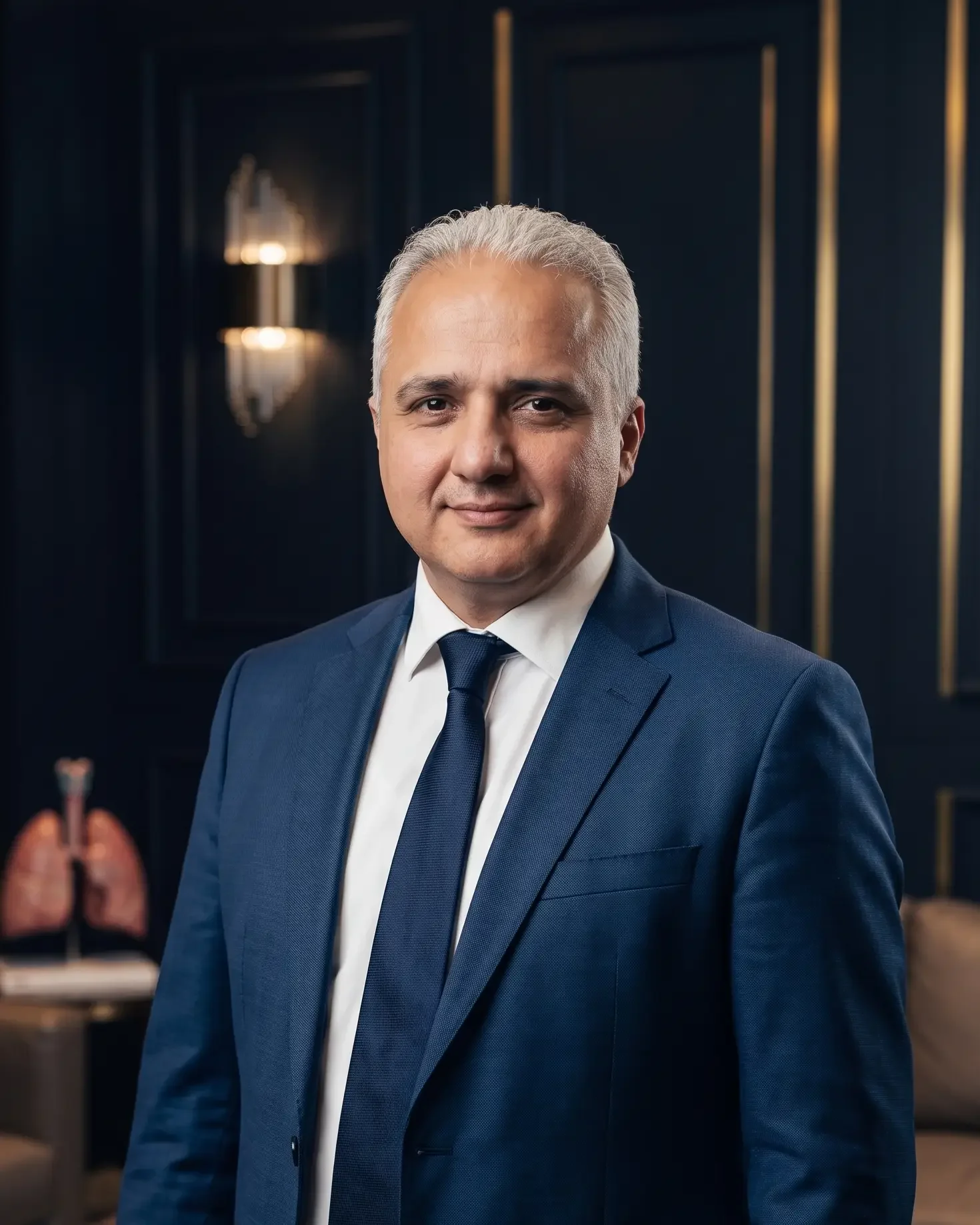
Prof. Dr. Akın Akakın is a professor of neurosurgery specialising in functional neurosurgery for the full spectrum of movement disorders. His 300+ DBS case volume includes not only Parkinson's patients but also essential tremor, dystonia, and select OCD cases. His unit was recognised as a Centre of Excellence for functional neurosurgery and microelectrode recording (MER) technique.