Rhinoplasty in Turkey
FREE PRE-EVALUATION
Upload your Photos, X-Rays or MRI Reports to request analysis from a specialist.
Consultant Status: Will be online in 4h 9m
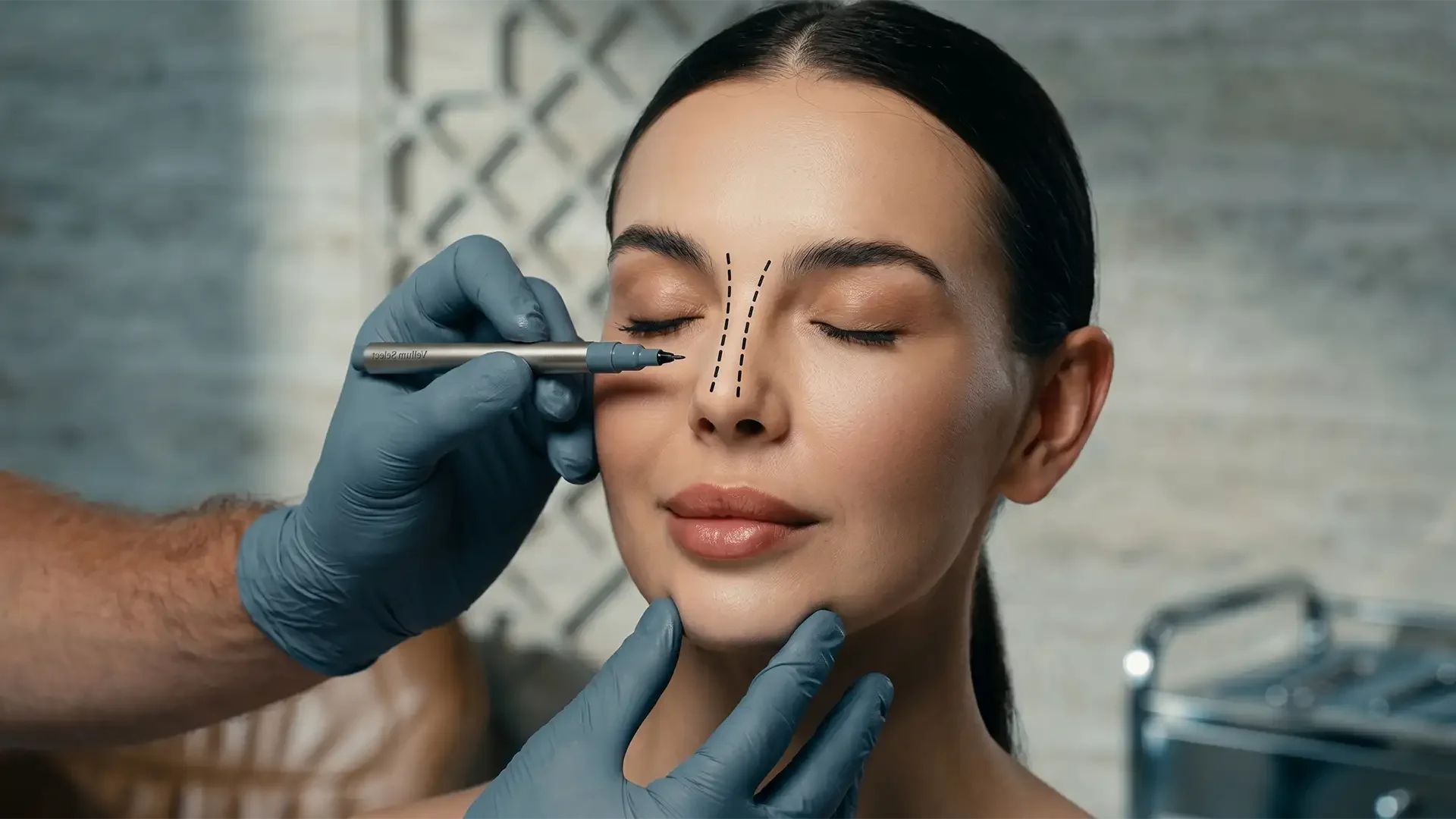
Turkey performs more rhinoplasty procedures per capita than any other country in the world. Istanbul alone is home to thousands of ENT and plastic surgeons who specialise in nose surgery, and the city has developed a surgical infrastructure (from hospital facilities to aftercare protocols) that is specifically built around international patients.
But volume is not quality. The same market that produces world-class rhinoplasty results also produces the revision cases that arrive at experienced surgeons' clinics months later. Vellum Select exists to solve this problem: we curate individual surgeons whose training, case volume, and clinical outcomes meet the standards that informed patients should expect.
Conditions This Treatment Addresses
Frequently Asked Questions
About Rhinoplasty in Turkey
How much does rhinoplasty cost in Turkey?
Rhinoplasty in Turkey typically costs between £2,000 and £3,500, depending on the complexity of the case and the technique used. This includes the surgeon's fee, hospital facility, anaesthesia, and post-operative follow-up. The equivalent procedure in the UK ranges from £5,000 to £7,000.
Is rhinoplasty in Turkey safe?
When performed by a qualified, board-certified surgeon at an accredited facility, rhinoplasty in Turkey is as safe as anywhere in the world. The critical variable is surgeon selection, not geography. Vellum Select curates surgeons based on training credentials, specialisation, case volume, and clinical outcomes — not price or marketing.
How long do I need to stay in Istanbul after rhinoplasty?
Plan for 7–10 days. Surgery typically occurs on day 2 after consultation and pre-operative tests. The nasal splint is removed on day 7, after which most patients are safe to fly home. Some patients prefer to stay an additional 2–3 days for comfort.
Will I have visible scars?
Closed rhinoplasty leaves no external scars (all incisions are inside the nostrils). Open rhinoplasty involves a small incision across the columella that typically fades to near-invisibility within a few months. Your surgeon will recommend the approach based on the modifications needed.
Can rhinoplasty fix my breathing problems?
Yes. If you have a deviated septum, nasal valve collapse, or turbinate hypertrophy, these can be corrected during the same surgery. Dr. Delioğlu is an ENT specialist, so functional nasal surgery is a core part of his training — not an add-on.
What is the difference between rhinoplasty and septoplasty?
Rhinoplasty reshapes the external appearance of the nose. Septoplasty corrects a deviated septum inside the nose to improve breathing. When both are needed, the combined procedure is called septorhinoplasty and is performed in a single session.
When will I see the final result?
You will see a significant change at splint removal (day 7), and approximately 80–90% of the result is visible by month 3. The final shape is typically assessed at 12 months, as the last traces of swelling resolve gradually.
Can Turkey's surgeons handle my nose type?
Turkish rhinoplasty surgeons work with an exceptionally diverse patient base — Middle Eastern, European, African, Central Asian, and South Asian nasal anatomies are all part of daily practice. This diversity of experience is an advantage that surgeons in more ethnically homogeneous markets do not have.
Why Turkey for Rhinoplasty?
Turkey's dominance in rhinoplasty is driven by three factors that reinforce each other.
Surgical volume creates expertise. Turkish rhinoplasty surgeons see more noses per year than most Western surgeons see in a decade. This case volume accelerates the learning curve and exposes surgeons to the full range of nasal anatomies (Caucasian, Middle Eastern, African, South Asian) that a surgeon in London or Berlin might encounter only occasionally.
Cost makes quality accessible. A rhinoplasty procedure that costs £5,000–£7,000 in the UK or €6,000–€9,000 in Germany is available in Istanbul for approximately £2,000–£3,500, depending on complexity. This is not because the surgery is inferior; it is because Turkey's operating costs, from hospital fees to anaesthesia, are structurally lower. The materials, implants, and equipment used in top Istanbul clinics are identical to those used in Western European hospitals.
Infrastructure is purpose-built for medical tourism. JCI-accredited hospitals, multilingual medical coordinators, airport transfer services, and recovery accommodation are standard in Istanbul. The city receives direct flights from virtually every European capital, with flight times of 3–4 hours from London, Paris, and Berlin.
Rhinoplasty Cost in Turkey vs. the UK and Europe
| Country | Rhinoplasty Cost (approximate) |
|---|---|
| United Kingdom | £5,000–£7,000 |
| Germany | €6,000–€9,000 |
| France | €5,500–€8,000 |
| United States | $7,000–$15,000 |
| Turkey (Istanbul) | £2,000–£3,500 |
Prices include surgeon's fee, hospital facility, anaesthesia, and post-operative follow-up. Revision rhinoplasty and cases requiring cartilage grafting may be higher. Vellum Select provides transparent pricing with no hidden costs.
Rhinoplasty Techniques
Open Rhinoplasty
The surgeon makes a small incision across the columella (the strip of tissue between the nostrils), allowing the nasal skin to be lifted for full visibility of the underlying bone and cartilage structure. Open rhinoplasty is preferred for complex cases (significant dorsal hump reduction, major tip reshaping, structural grafting) where precision outweighs the trade-off of a small external scar (which typically fades to near-invisibility within months).
Closed Rhinoplasty
All incisions are made inside the nostrils, leaving no external scarring. Closed rhinoplasty is suitable for patients who need less extensive modifications, mild hump reduction, subtle tip refinement, or nostril narrowing. Recovery tends to be slightly faster, with less initial swelling.
Piezo (Ultrasonic) Rhinoplasty
An advanced technique that uses ultrasonic energy to sculpt nasal bones with extreme precision while leaving surrounding soft tissue, blood vessels, and mucosa intact. The result is significantly less bruising and swelling compared to traditional methods. Read more about Piezo Rhinoplasty in Turkey →
Ethnic Rhinoplasty
Rhinoplasty tailored to patients of Middle Eastern, African, South Asian, and other non-Caucasian heritage. Ethnic rhinoplasty requires different surgical strategies (augmentation rather than reduction, alar base modification, tip support techniques for thicker skin) and a philosophical commitment to preserving the patient's ethnic identity while achieving their aesthetic goals. Read more about Ethnic Rhinoplasty in Turkey →
What Rhinoplasty Can Correct
Rhinoplasty addresses both aesthetic concerns and functional problems:
Aesthetic: dorsal hump (bump on the bridge), wide or bulbous tip, asymmetry, wide nostrils, drooping tip, crooked nose, flat bridge, post-traumatic deformity.
Functional: deviated septum causing breathing difficulty, nasal valve collapse, turbinate hypertrophy. When functional correction is needed alongside cosmetic refinement, the procedure is called septorhinoplasty and is performed in a single session.
Recovery Timeline for International Patients
| Milestone | Timing |
|---|---|
| Consultation & pre-op tests | Day 1 |
| Surgery | Day 2 |
| Rest & initial recovery | Days 3–6 |
| Splint removal & follow-up | Day 7 |
| Safe to fly home | Day 7–10 |
| Return to desk work | Week 2 |
| Return to exercise | Week 4–6 |
| Final result | Month 12 |
Most international patients plan a 7–10 day stay in Istanbul. Vellum Select coordinates accommodation recommendations and transfer logistics.
Your Surgeon: Op. Dr. Kemal Caner Delioğlu
Vellum Select's curated rhinoplasty specialist is Op. Dr. Kemal Caner Delioğlu, an ENT and Head & Neck Surgery specialist based in Beşiktaş, Istanbul.
Dr. Delioğlu trained at Gazi University Faculty of Medicine and completed his specialisation at Yıldırım Beyazıt University and Ankara City Hospital. His ENT surgical background means he treats the nose as both an aesthetic feature and a functional organ, addressing breathing, septum alignment, and turbinate issues within the same procedure.
He holds a Health Tourism Authorization Certificate from Turkey's Ministry of Health and is also an educator who trains other physicians in medical aesthetics techniques, a role that reflects the depth and precision of his clinical approach.
Journey to Recovery
Before Surgery
A detailed consultation including facial analysis, nasal examination, and digital imaging to preview expected results. If a deviated septum or breathing issue is identified, functional correction is planned simultaneously.
Before Surgery
A detailed consultation including facial analysis, nasal examination, and digital imaging to preview expected results. If a deviated septum or breathing issue is identified, functional correction is planned simultaneously.
Surgery
Performed under general anaesthesia, lasting 1.5–3 hours depending on complexity. Carried out as a day-case or with one overnight hospital stay.
Surgery
Performed under general anaesthesia, lasting 1.5–3 hours depending on complexity. Carried out as a day-case or with one overnight hospital stay.
Immediately After
A nasal splint is applied to the bridge. Internal silicone splints may be placed inside the nostrils. Patients breathe through their mouth for the first 24–48 hours.
Immediately After
A nasal splint is applied to the bridge. Internal silicone splints may be placed inside the nostrils. Patients breathe through their mouth for the first 24–48 hours.
Days 1–7
Controlled swelling and bruising around the eyes, peaking at day 2–3 and progressively resolving. Pain is generally mild and managed with standard analgesics. Most patients feel comfortable going out with the splint by day 3–4.
Days 1–7
Controlled swelling and bruising around the eyes, peaking at day 2–3 and progressively resolving. Pain is generally mild and managed with standard analgesics. Most patients feel comfortable going out with the splint by day 3–4.
Day 7: Splint Removal
The splint is removed, revealing the first look at the new nose shape. The nose will still be swollen, but the fundamental change is visible.
Day 7: Splint Removal
The splint is removed, revealing the first look at the new nose shape. The nose will still be swollen, but the fundamental change is visible.
Weeks 2–6
Residual swelling diminishes. Social and professional activities resume. Exercise can gradually restart after 3–4 weeks.
Weeks 2–6
Residual swelling diminishes. Social and professional activities resume. Exercise can gradually restart after 3–4 weeks.
Months 3–12
The nose continues to refine as swelling resolves completely. Final results are typically assessed at the 12-month mark, though 80–90% of the result is visible by month 3.
Months 3–12
The nose continues to refine as swelling resolves completely. Final results are typically assessed at the 12-month mark, though 80–90% of the result is visible by month 3.