Radiofrequency Turbinoplasty in Turkey
FREE PRE-EVALUATION
Upload your Photos, X-Rays or MRI Reports to request analysis from a specialist.
Consultant Status: Online
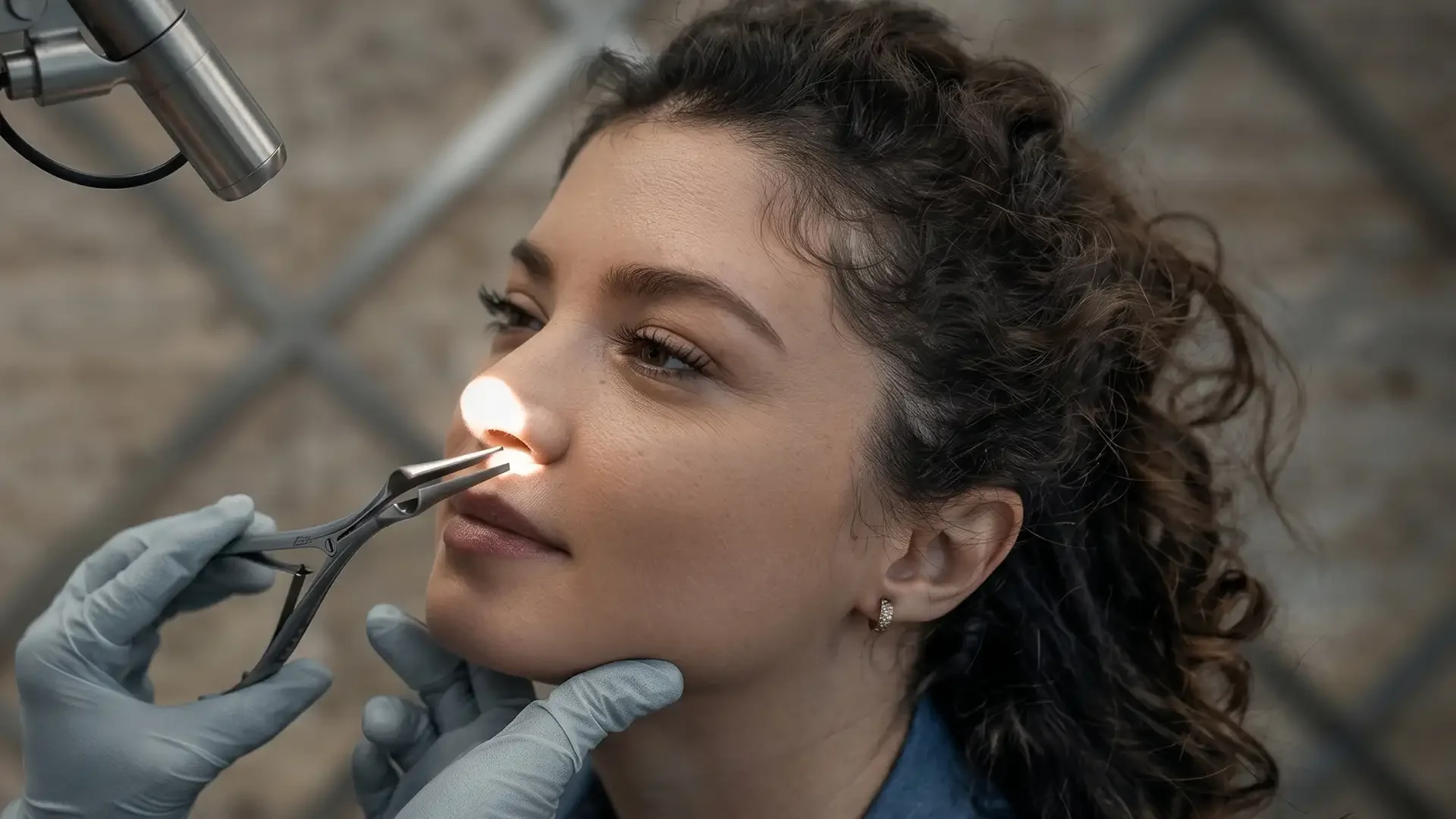
Breathing Freely: RF Turbinate Reduction in Istanbul
The inferior turbinates are scroll-like structures on the side walls of the nasal cavity that warm, humidify, and filter the air you breathe. When they become chronically enlarged, a condition called turbinate hypertrophy—they obstruct airflow, causing persistent nasal congestion, mouth breathing, snoring, and sleep disruption. Radiofrequency turbinoplasty addresses the root cause by shrinking the turbinate's internal volume without cutting or removing the functional surface mucosa.
Istanbul's ENT surgeons offer the procedure as a day case under local anaesthesia, with patients returning to normal activities the following day. Combined with septoplasty for deviated septum patients, it restores bilateral nasal breathing that medication alone could not achieve. Costs are 60 to 70 per cent below UK and European private ENT rates.
Conditions This Treatment Addresses
Frequently Asked Questions
About Radiofrequency Turbinoplasty in Turkey
What is radiofrequency turbinoplasty?
Radiofrequency turbinoplasty is a minimally invasive procedure that uses controlled radiofrequency energy to shrink enlarged inferior turbinates from the inside, preserving the surface lining. A thin probe inserted into the turbinate delivers energy that creates a precise thermal lesion; over 4 to 6 weeks, the treated tissue contracts, permanently widening the nasal airway.
How long does the turbinate reduction last?
The volume reduction is permanent for the treated tissue. Unlike medical management (sprays), which provides only temporary shrinkage, RF turbinoplasty physically reduces the submucosal tissue volume. In patients with uncontrolled allergic rhinitis, new hypertrophy can develop in untreated turbinate tissue over years, but the treated segments remain reduced.
Is RF turbinoplasty painful?
The procedure is performed under local anaesthesia with numbing pledgets placed in the nose beforehand. Patients feel gentle warmth during energy delivery but no pain. Post-operative discomfort is minimal—most patients describe a sensation of nasal congestion for the first few days rather than pain—and is managed with over-the-counter analgesia if needed.
How much does RF turbinoplasty cost in Turkey?
Bilateral RF turbinoplasty in Istanbul costs approximately £800–£1,500, compared to £3,000–£5,000 in the UK. Combined septoplasty and turbinoplasty costs £2,000–£3,500. Prices include nasal endoscopy, the procedure, and all follow-up.
Will I have nasal packing after the procedure?
No. One of the key advantages of RF turbinoplasty over traditional turbinate surgery is that it requires no nasal packing. Because the mucosa is not cut or removed, there is minimal bleeding and no need for post-operative packing, which is often the most unpleasant part of traditional nasal surgery.
How soon will I breathe better after turbinoplasty?
Some patients notice immediate improvement due to the decongestant used during the procedure, but this fades. Temporary congestion from post-procedure swelling occurs for the first 5 to 7 days. Progressive, permanent improvement begins by week 2 and continues through weeks 4 to 6 as the turbinate tissue contracts. The full result is achieved by 8 weeks.
What Is Radiofrequency Turbinoplasty?
A thin RF probe is inserted through the anterior tip of the inferior turbinate into the submucosal stroma (the spongy tissue beneath the surface lining). Controlled radiofrequency energy at 85°C creates a precise thermal lesion within the stroma. Over the following 4 to 6 weeks, the treated tissue undergoes coagulative necrosis and is gradually replaced by scar tissue that occupies less volume than the original hypertrophied stroma.
Critically, the overlying respiratory mucosa—the functional ciliated epithelium that humidifies and filters air—is preserved because the energy is delivered beneath it. This distinguishes RF turbinoplasty from older techniques such as partial turbinectomy or laser vaporisation, which remove or destroy surface mucosa and risk causing chronic dryness, crusting, and empty nose syndrome.
Who Is an Ideal Candidate?
RF turbinoplasty is indicated for patients with chronic nasal obstruction caused by inferior turbinate hypertrophy that has not responded adequately to medical management (intranasal corticosteroids, antihistamines, decongestants). Ideal candidates have a positive response to a decongestant spray test: if phenylephrine or oxymetazoline spray temporarily improves breathing, the obstruction is mucosal and turbinate-based and will respond to RF reduction. Patients with a concurrent deviated septum benefit from combined septoplasty and turbinoplasty.
Radiofrequency Turbinoplasty Cost in Turkey vs. the UK and Europe
| Procedure | UK Cost | Turkey (Istanbul) Cost |
|---|---|---|
| RF Turbinoplasty (bilateral) | £3,000–£5,000 | £800–£1,500 |
| Septoplasty + RF Turbinoplasty | £6,000–£9,000 | £2,000–£3,500 |
Prices include preoperative nasal endoscopy, the surgical procedure, anaesthesia, and all post-operative follow-up. An overnight hospital stay is not required.
The Procedure: What to Expect
Step 1: Anaesthesia and Preparation
The procedure is performed under local anaesthesia. Cotton pledgets soaked in a local anaesthetic and decongestant solution are placed in the nose for 10 minutes, completely numbing the turbinates. The patient is awake and comfortable throughout.
Step 2: RF Energy Delivery (10–15 minutes)
The RF probe is inserted into the anterior, middle, and posterior portions of each inferior turbinate. At each site, energy is delivered for approximately 15 seconds. The patient feels gentle warmth but no pain. A total of 3 to 4 application sites per turbinate is typical.
Step 3: Immediate Aftercare
No nasal packing is required. A small amount of blood-tinged mucus is normal for 24 hours. The patient is discharged with saline nasal spray and post-operative instructions. Breathing is often immediately improved due to the decongestant effect, though temporary rebound swelling may occur over the next few days before the permanent reduction begins.
Meet Your Istanbul ENT Surgeons
Vellum Select's ENT surgeons perform turbinoplasty as part of a comprehensive nasal surgery practice that includes septoplasty, functional rhinoplasty, and endoscopic sinus surgery. Their understanding of nasal airflow dynamics ensures that the turbinate reduction is proportional and preserves the nose's humidification and filtration functions. Combined septoplasty and turbinoplasty patients receive a single recovery, addressing both structural and mucosal causes of obstruction.
Journey to Recovery
Day 1: Procedure and Immediate Recovery
The RF turbinoplasty is performed under local anaesthesia and takes 15 to 20 minutes. No packing is placed. You may experience a sense of improved breathing initially, followed by some congestion from the decongestant wearing off. Blood-tinged nasal discharge is normal. Use saline spray every 2 to 3 hours. You return to your hotel the same day.
Day 1: Procedure and Immediate Recovery
The RF turbinoplasty is performed under local anaesthesia and takes 15 to 20 minutes. No packing is placed. You may experience a sense of improved breathing initially, followed by some congestion from the decongestant wearing off. Blood-tinged nasal discharge is normal. Use saline spray every 2 to 3 hours. You return to your hotel the same day.
Days 2 to 3: Rebound Swelling Phase
Some nasal congestion returns as the turbinate tissues undergo the early inflammatory phase of healing. This is expected and temporary. Continue saline spray and avoid blowing your nose forcefully. Most patients are comfortable enough for light sightseeing. Avoid strenuous activity, bending, and heavy lifting.
Days 2 to 3: Rebound Swelling Phase
Some nasal congestion returns as the turbinate tissues undergo the early inflammatory phase of healing. This is expected and temporary. Continue saline spray and avoid blowing your nose forcefully. Most patients are comfortable enough for light sightseeing. Avoid strenuous activity, bending, and heavy lifting.
Days 5 to 7: Initial Follow-Up
Return to the clinic for a nasal endoscopy check. The surgeon clears any minimal crusting and verifies healing progress. By day 7, patients begin to notice improved nasal breathing as the early oedema subsides. International patients are cleared to fly home by day 5 to 7.
Days 5 to 7: Initial Follow-Up
Return to the clinic for a nasal endoscopy check. The surgeon clears any minimal crusting and verifies healing progress. By day 7, patients begin to notice improved nasal breathing as the early oedema subsides. International patients are cleared to fly home by day 5 to 7.
Weeks 2 to 4: Progressive Improvement
Nasal breathing continues to improve weekly as the turbinate tissue undergoes scar contraction and volume reduction. Crusting (if any) resolves. Normal activities resume. Avoid nasal irritants (smoke, strong chemicals). Continue saline spray if the nose feels dry.
Weeks 2 to 4: Progressive Improvement
Nasal breathing continues to improve weekly as the turbinate tissue undergoes scar contraction and volume reduction. Crusting (if any) resolves. Normal activities resume. Avoid nasal irritants (smoke, strong chemicals). Continue saline spray if the nose feels dry.
Weeks 4 to 6: Near-Final Result
The turbinates have contracted to approximately their final reduced volume. Nasal breathing is significantly and permanently improved. The full result is typically achieved by 8 weeks.
Weeks 4 to 6: Near-Final Result
The turbinates have contracted to approximately their final reduced volume. Nasal breathing is significantly and permanently improved. The full result is typically achieved by 8 weeks.
Months 3 to 6: Long-Term Confirmation
The turbinate volume is stable. Any concurrent septoplasty healing is complete. Patients who previously relied on decongestant sprays confirm they no longer need them. The result is permanent for the treated tissue, though new hypertrophy can occur years later if allergic rhinitis is not managed.
Months 3 to 6: Long-Term Confirmation
The turbinate volume is stable. Any concurrent septoplasty healing is complete. Patients who previously relied on decongestant sprays confirm they no longer need them. The result is permanent for the treated tissue, though new hypertrophy can occur years later if allergic rhinitis is not managed.