Ethnic Rhinoplasty in Turkey
FREE PRE-EVALUATION
Upload your Photos, X-Rays or MRI Reports to request analysis from a specialist.
Consultant Status: Online
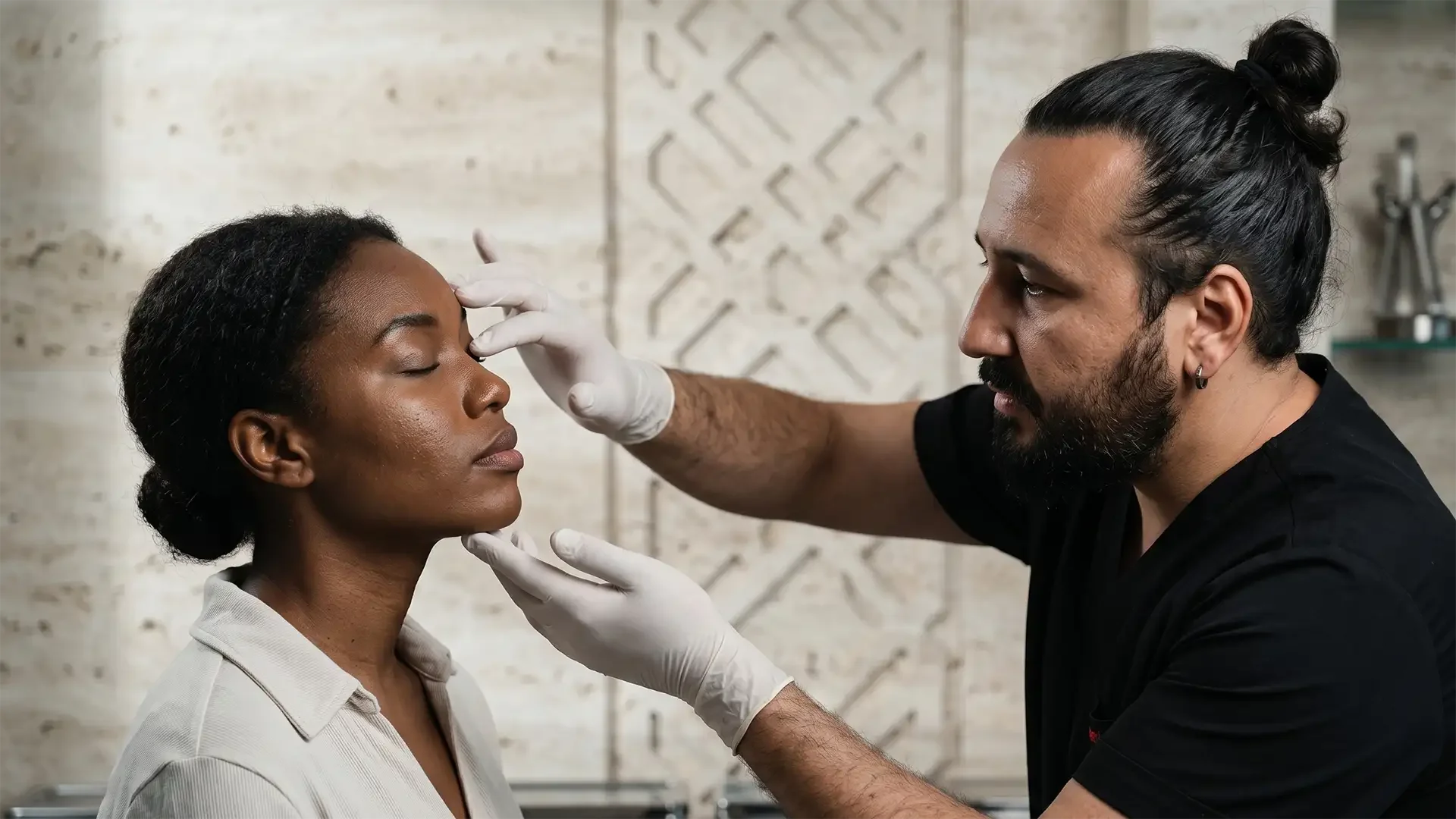
Ethnic rhinoplasty is nose surgery designed for patients whose nasal anatomy differs significantly from the Caucasian structures that traditional rhinoplasty techniques were originally developed for. Patients of Middle Eastern, African, South Asian, East Asian, and mixed heritage present unique structural characteristics (thicker skin, wider alar bases, flatter bridges, different cartilage strength and distribution) that require fundamentally different surgical strategies.
The goal of ethnic rhinoplasty is not to erase ethnic features. It is to refine and harmonise the nose within the patient's own facial context, achieving the aesthetic improvement they want while preserving the cultural identity that makes their face theirs.
Turkey is uniquely positioned for this work. Istanbul sits at the crossroads of Europe, the Middle East, Central Asia, and Africa, and Turkish rhinoplasty surgeons operate daily on the full spectrum of nasal anatomies. This diversity of clinical experience is something that surgeons in ethnically homogeneous markets (London, Seoul, Stockholm) simply cannot replicate.
Frequently Asked Questions
About Ethnic Rhinoplasty in Turkey
What makes ethnic rhinoplasty different from regular rhinoplasty?
Ethnic rhinoplasty uses different surgical strategies tailored to non-Caucasian nasal anatomy — thicker skin, wider alar bases, different cartilage structure. It often involves augmentation (building up) rather than reduction (removing), and requires a philosophical commitment to preserving the patient's ethnic identity while achieving their aesthetic goals.
Will my nose still look like "my" nose?
That is the explicit goal. A skilled ethnic rhinoplasty surgeon refines and harmonises your nose within your own facial features and ethnic context — not towards a standardised template. The best results are noses that look naturally beautiful, not obviously operated on.
Is ethnic rhinoplasty more complex than standard rhinoplasty?
It can be. Thicker skin is less forgiving and harder to predict, cartilage grafting adds surgical steps, and balancing refinement with identity preservation requires experienced aesthetic judgment. This is why surgeon selection matters even more than in standard rhinoplasty.
Why is Turkey a good choice for ethnic rhinoplasty?
Turkish surgeons operate on one of the most ethnically diverse patient populations in the world. Istanbul's geographic position means surgeons routinely work with Middle Eastern, European, Central Asian, African, and South Asian nasal anatomies. This breadth of daily experience is a significant advantage over surgeons who primarily see one ethnic group.
How long until I see my final result?
For patients with thicker skin (common in ethnic rhinoplasty), the final result typically emerges at 12–18 months as residual swelling fully resolves. About 80% of the result is visible by month 3–4. Patience is essential — early swelling does not represent the final outcome.
Can breathing issues be fixed at the same time?
Yes. Dr. Delioğlu is an ENT specialist, so functional issues — deviated septum, turbinate enlargement, nasal valve collapse — are addressed within the same procedure. You do not need a separate surgery for breathing improvement.
Why Ethnic Rhinoplasty Requires a Different Approach
Standard rhinoplasty textbooks and techniques were developed primarily for Caucasian noses, which tend to have thin skin, prominent dorsal height, strong tip cartilage, and narrow alar bases. Applying these techniques unchanged to non-Caucasian anatomy produces the results that patients fear most: a nose that looks "operated on," out of place, or culturally dissonant.
Ethnic rhinoplasty differs in several key ways:
Skin thickness. Many patients of Middle Eastern, African, and South Asian heritage have thicker nasal skin with more sebaceous glands. Thick skin does not drape over cartilage changes as readily as thin skin, which means the surgeon must be more strategic about tip refinement techniques and realistic about the degree of visible change achievable.
Augmentation vs. reduction. Caucasian rhinoplasty is often reductive (removing a dorsal hump, narrowing the bridge. Ethnic rhinoplasty frequently involves augmentation) building up a flatter bridge, adding tip projection, or strengthening a weak cartilage framework using grafts from the septum, ear, or rib.
Alar base management. Wide nostrils or flared alar bases are a common concern in ethnic rhinoplasty. Alar base reduction (nostril narrowing) requires precise technique to avoid visible scarring and to maintain natural nostril shape. Overly aggressive reduction is one of the most common mistakes in poorly executed ethnic rhinoplasty.
Tip support. In many ethnic nasal types, the tip cartilages are softer or less defined than in Caucasian anatomy. Structural grafting (cartilage grafts placed to support, project, or define the tip) is often essential to achieve lasting results that do not collapse over time.
Common Ethnic Rhinoplasty Goals
Every patient's goals are individual, but common requests include:
Middle Eastern patients: dorsal hump reduction (the most common request), tip refinement and rotation, narrowing a wide bridge, while maintaining ethnic character and avoiding a "pinched" or overly small result.
African and Afro-Caribbean patients: bridge augmentation, tip projection and definition, alar base narrowing, improving nostril symmetry, all while preserving the natural width and character that suits their facial proportions.
South Asian patients: tip refinement and definition, bridge augmentation or smoothing, improving tip rotation, addressing thick skin challenges, with results that look natural within South Asian facial features.
East Asian patients: bridge augmentation, tip projection, nostril reshaping, often with a preference for subtle enhancement rather than dramatic change.
Ethnic Rhinoplasty Cost in Turkey
| Procedure | UK Cost | Turkey Cost |
|---|---|---|
| Ethnic rhinoplasty | £5,000–£8,000 | £2,500–£4,000 |
| Ethnic rhinoplasty with rib cartilage graft | £7,000–£10,000 | £3,500–£5,000 |
Cases requiring cartilage grafting (from septum, ear, or rib) are more complex and priced accordingly. Vellum Select provides transparent, all-inclusive pricing.
Your Surgeon: Op. Dr. Kemal Caner Delioğlu
Vellum Select's curated rhinoplasty specialist is Op. Dr. Kemal Caner Delioğlu, an ENT and Head & Neck Surgery specialist based in Beşiktaş, Istanbul.
Dr. Delioğlu's ENT surgical background provides the anatomical depth to work with diverse nasal structures, he understands the internal functional anatomy (septum, turbinates, nasal valves) as thoroughly as the external aesthetic framework. His patient base spans Middle Eastern, European, North African, and Central Asian heritage, giving him daily experience with the range of nasal anatomies that ethnic rhinoplasty demands.
He is also a medical aesthetics educator who trains other physicians, reflecting a systematised mastery of facial anatomy that extends beyond routine clinical practice.
Journey to Recovery
Day 7: Splint Removal
The nasal splint is removed at day 7.
Day 7: Splint Removal
The nasal splint is removed at day 7.
Days 7–10: Safe to Fly
International patients are cleared to fly home between days 7 and 10.
Days 7–10: Safe to Fly
International patients are cleared to fly home between days 7 and 10.
Weeks 2–3: Socially Presentable
Most swelling has resolved enough for social and professional activities to resume.
Weeks 2–3: Socially Presentable
Most swelling has resolved enough for social and professional activities to resume.
Months 3–4: 80% Resolved
Approximately 80% of post-operative swelling has resolved. The nose shape is clearly visible, though refinement continues.
Months 3–4: 80% Resolved
Approximately 80% of post-operative swelling has resolved. The nose shape is clearly visible, though refinement continues.
Months 12–18: Final Result
Final results emerge between months 12 and 18. Patients with thicker skin experience more prolonged swelling — patience is particularly important in ethnic rhinoplasty.
Months 12–18: Final Result
Final results emerge between months 12 and 18. Patients with thicker skin experience more prolonged swelling — patience is particularly important in ethnic rhinoplasty.