Deep Plane Facelift in Turkey
FREE PRE-EVALUATION
Upload your Photos, X-Rays or MRI Reports to request analysis from a specialist.
Consultant Status: Online
The Deep Plane Difference: Anatomy-Driven Facial Rejuvenation
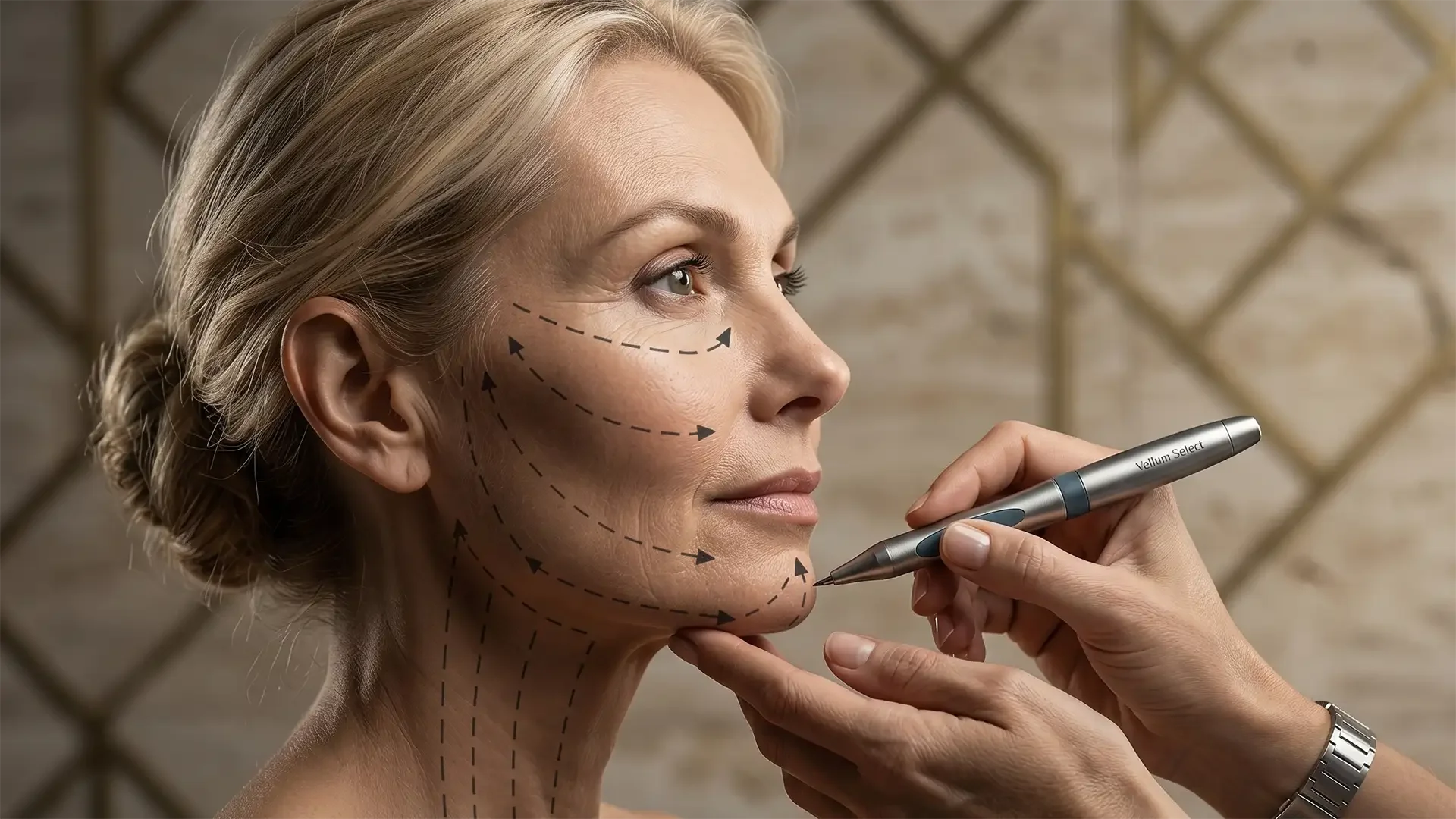
Traditional facelifts pull the skin, stretch it backward, and suture it under tension. The result can be the tell-tale windswept look that signals cosmetic surgery. A deep plane facelift operates on a fundamentally different principle: instead of pulling the skin, it releases the deeper SMAS layer—the muscular-aponeurotic sheet that drapes the entire face from zygoma to platysma—and repositions it vertically as a single anatomical unit. The skin follows passively, without tension.
Istanbul's facial plastic surgeons have deep plane expertise and deliver results that rival the world's best clinics in London, New York, and Seoul at costs 60 to 70 per cent lower. The difference is the technique, not the outcome.
Conditions This Treatment Addresses
Frequently Asked Questions
About Deep Plane Facelift in Turkey
What is the difference between a deep plane facelift and a traditional facelift?
A traditional facelift pulls only the skin while a deep plane facelift releases and repositions the deeper SMAS layer and skin as a single unit. The deep plane technique produces a more natural result because it lifts the tissues that actually descended, rather than stretching the skin over them. It also lasts longer (10 to 15 years vs. 5 to 8 years for skin-only lifts) because the structural repositioning resists gravity better than skin tightening alone.
How long does a deep plane facelift last?
A well-executed deep plane facelift typically lasts 10 to 15 years. The technique resets facial ageing to an earlier point, but the natural ageing process continues. The result does not suddenly reverse—the face ages forward from the new, younger position rather than reverting to the pre-surgery state.
Will I look unnatural or windswept?
No. The deep plane technique specifically avoids the windswept, operated look precisely because it repositions the deeper structural layer vertically rather than pulling skin laterally under tension. When performed correctly, you will look like a younger, refreshed version of yourself, not like a different person.
How much does a deep plane facelift cost in Turkey?
A deep plane facelift in Istanbul costs approximately £3,500–£6,500, compared to £12,000–£20,000 in the UK. A combined deep plane facelift and neck lift costs £4,500–£7,500. The price includes surgery, anaesthesia, hospital stay, and all follow-up visits.
What is the recovery time for a deep plane facelift?
Most patients return to work and social activities within 3 weeks. Swelling peaks at 48 hours and resolves approximately 70 per cent by week 3. The final result is visible at 3 to 6 months. Patients can fly home 10 to 14 days after surgery.
Is a deep plane facelift more risky than a standard facelift?
When performed by an experienced surgeon, the deep plane technique does not carry higher risk than a conventional SMAS facelift and may carry lower risk to the facial nerve because the nerve branches are protected within the thicker skin-SMAS composite flap. The key variable is surgeon experience: this is technically demanding surgery that should only be performed by surgeons who do it regularly.
What Is a Deep Plane Facelift?
In a conventional facelift, the surgeon undermines the skin, lifts it, and trims the excess. Some surgeons add SMAS plication (suturing the SMAS layer like a pleat), which provides deeper support but does not actually release and reposition the SMAS. The deep plane facelift goes further: the surgeon dissects beneath the SMAS, releasing the zygomatic and masseteric retaining ligaments that tether the midface, then lifts the skin-SMAS unit as one composite flap. Because the skin and SMAS are not separated, blood supply to the skin is superior, reducing the risk of flap necrosis.
The vertical vector of lift repositions descended cheek fat back over the malar prominence, softens the nasolabial folds from their deep origin (not just at the surface), and redefines the jawline by elevating the platysma. The result is a face that looks younger without looking operated on.
Who Is an Ideal Candidate?
The deep plane facelift is suited to patients with moderate to advanced facial ageing—typically ages 45 to 75—where the primary concerns are descended midface tissues (creating deep nasolabial folds and marionette lines), jowling (loss of a crisp jawline definition), and neck laxity. It is particularly indicated for patients who have had previous skin-only lifts that have failed or look unnatural, as the deep plane approach corrects the underlying structural descent that skin tightening alone cannot address.
Deep Plane Facelift Cost in Turkey vs. the UK and Europe
| Procedure | UK Cost | Germany Cost | Turkey (Istanbul) Cost |
|---|---|---|---|
| Deep Plane Facelift | £12,000–£20,000 | €12,000–€22,000 | £3,500–£6,500 |
| Deep Plane Facelift + Neck Lift | £15,000–£25,000 | €15,000–€28,000 | £4,500–£7,500 |
Prices include preoperative consultation, the surgical procedure, anaesthesia, hospital stay (typically 1 night), and all post-operative follow-up visits during your stay in Istanbul.
The Procedure: What to Expect
Step 1: Anaesthesia and Incision Design
Under general anaesthesia, the surgeon marks incision lines that begin in the temporal hairline, descend in front of the ear (inside the tragus for invisibility), curve around the earlobe, and continue behind the ear into the occipital hairline. These incisions are placed within natural anatomical boundaries so scars are virtually undetectable once healed.
Step 2: Deep Plane Dissection (the critical phase)
The surgeon elevates the skin-SMAS flap as a single unit, releasing the zygomatic and masseteric retaining ligaments under direct vision. The facial nerve branches lie deep to the dissection plane and are protected by the thickness of the flap. This release is what allows the midface to be lifted vertically rather than pulled laterally.
Step 3: SMAS Repositioning and Closure
The mobilised SMAS is repositioned vertically and secured with sutures to the deep temporal fascia superiorly and the mastoid periosteum posteriorly. Excess skin is redraped without tension, and the excess is trimmed conservatively to avoid a tight appearance. The incisions are closed in layers, with meticulous attention to the tragus and earlobe.
Meet Your Istanbul Surgeons
Vellum Select's facial plastic surgeons are board-certified and perform deep plane facelifts as a core procedure, not an occasional one. They have trained in the deep plane technique under the pioneers who developed it and operate in JCI-accredited hospitals with full anaesthesia support. Your surgeon will review your facial anatomy, discuss the expected vectors of lift, and show you before-and-after images from their personal portfolio, not a generic gallery.
Journey to Recovery
Day 1: Surgery and Overnight Stay
The deep plane facelift is performed under general anaesthesia and takes 4 to 6 hours depending on whether a neck lift is combined. A compressive head dressing is applied. You stay overnight in a private hospital room for monitoring. Drainage tubes (if used) collect any fluid. Pain is well-controlled with medication.
Day 1: Surgery and Overnight Stay
The deep plane facelift is performed under general anaesthesia and takes 4 to 6 hours depending on whether a neck lift is combined. A compressive head dressing is applied. You stay overnight in a private hospital room for monitoring. Drainage tubes (if used) collect any fluid. Pain is well-controlled with medication.
Days 2 to 3: Dressing Removal and Initial Recovery
The head dressing and drains are removed on day 2. You will see swelling and possibly bruising, which is entirely normal and expected. You are discharged to your hotel with written aftercare instructions. Cold compresses reduce swelling. Sleep with your head elevated on 2 to 3 pillows. Most international patients spend these days resting at their hotel.
Days 2 to 3: Dressing Removal and Initial Recovery
The head dressing and drains are removed on day 2. You will see swelling and possibly bruising, which is entirely normal and expected. You are discharged to your hotel with written aftercare instructions. Cold compresses reduce swelling. Sleep with your head elevated on 2 to 3 pillows. Most international patients spend these days resting at their hotel.
Days 5 to 7: Suture Removal and First Follow-Up
Return to the clinic for removal of sutures in front of the ear. Staples behind the ear and in the hairline are removed at days 7 to 10. Swelling begins to subside noticeably. You may begin light walking around Istanbul. Makeup can be applied to any visible bruising by day 7.
Days 5 to 7: Suture Removal and First Follow-Up
Return to the clinic for removal of sutures in front of the ear. Staples behind the ear and in the hairline are removed at days 7 to 10. Swelling begins to subside noticeably. You may begin light walking around Istanbul. Makeup can be applied to any visible bruising by day 7.
Days 10 to 14: Cleared to Fly Home
Most international patients are cleared to fly home by day 10 to 14. Residual swelling and mild tightness are normal. The surgeon provides a comprehensive aftercare plan and remains available for remote follow-up. Avoid strenuous activity, heavy lifting, and bending for 3 weeks.
Days 10 to 14: Cleared to Fly Home
Most international patients are cleared to fly home by day 10 to 14. Residual swelling and mild tightness are normal. The surgeon provides a comprehensive aftercare plan and remains available for remote follow-up. Avoid strenuous activity, heavy lifting, and bending for 3 weeks.
Weeks 3 to 6: Social Recovery
By 3 weeks, approximately 70 per cent of swelling has resolved and you can resume most social activities. The incisions are healing well and become progressively less visible. You may gradually return to exercise. The face continues to settle into its natural position.
Weeks 3 to 6: Social Recovery
By 3 weeks, approximately 70 per cent of swelling has resolved and you can resume most social activities. The incisions are healing well and become progressively less visible. You may gradually return to exercise. The face continues to settle into its natural position.
Months 3 to 6: Final Result
The final result becomes apparent as the last traces of swelling resolve and the deeper tissues fully settle. The lifted midface, defined jawline, and softened neck contour are now stable. The deep plane result is designed to last 10 to 15 years, as it addresses the structural descent rather than just tightening the skin.
Months 3 to 6: Final Result
The final result becomes apparent as the last traces of swelling resolve and the deeper tissues fully settle. The lifted midface, defined jawline, and softened neck contour are now stable. The deep plane result is designed to last 10 to 15 years, as it addresses the structural descent rather than just tightening the skin.