Spinal Surgery & Spine Surgery in Turkey
FREE PRE-EVALUATION
Upload your Photos, X-Rays or MRI Reports to request analysis from a specialist.
Consultant Status: Online
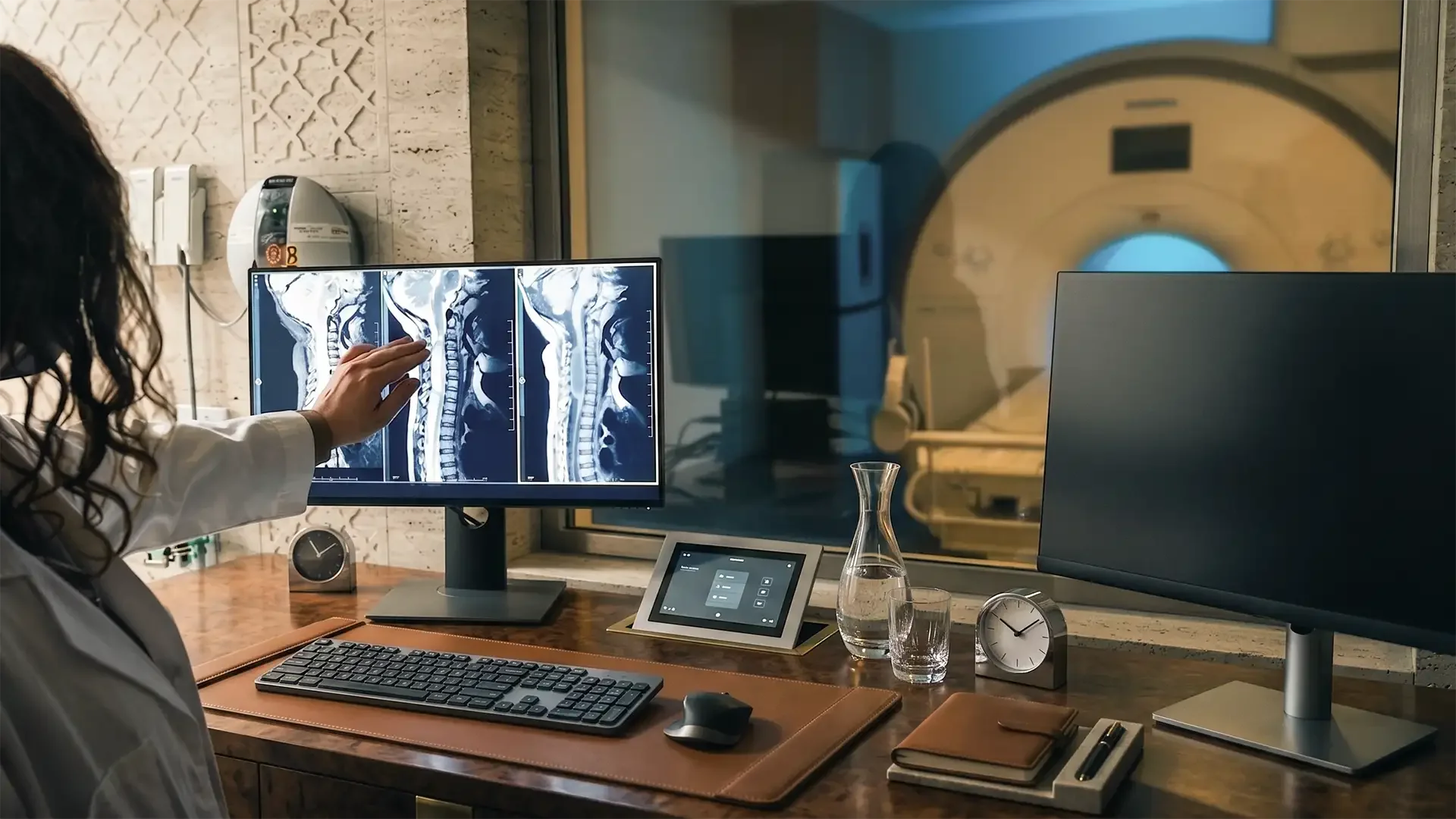
Restoring the Spine: Neurosurgical Spine Care in Istanbul
Spinal pathology is extraordinarily common—approximately 80 per cent of adults will experience at least one episode of significant back or neck pain in their lifetime. When conservative measures (physiotherapy, medication, epidural injections) fail to relieve radicular pain or when progressive neurological deficit develops (weakness, numbness, gait disturbance), surgery becomes the evidence-based intervention most likely to arrest decline and restore function.
Istanbul's neurosurgical spine surgeons combine microsurgical precision with minimally invasive techniques, delivering outcomes that match international benchmarks at 60 to 70 per cent below UK, German, and North American private surgical costs.
Conditions This Treatment Addresses
Frequently Asked Questions
About Spinal Surgery & Spine Surgery in Turkey
When is spinal surgery necessary?
Spinal surgery is indicated when conservative treatment (physiotherapy, medication, epidural injections) has failed to relieve disabling radicular pain for 6 to 12 weeks, or when progressive neurological deficit develops—specifically, worsening weakness, numbness in the saddle area, bowel or bladder dysfunction (cauda equina syndrome), or gait deterioration from myelopathy. The latter group requires urgent surgical decompression.
What is microdiscectomy and how successful is it?
Microdiscectomy is the most common spinal surgery, performed through a 2- to 3-centimetre incision to remove the herniated disc fragment compressing a nerve root. Success rates are 90 to 95 per cent for relief of leg pain (sciatica). The procedure does not treat back pain caused by disc degeneration, which is managed through rehabilitation.
How much does spinal surgery cost in Turkey?
Spinal surgery in Istanbul costs approximately £3,000–£12,000 depending on the procedure: microdiscectomy is £3,000–£5,000, laminectomy £4,000–£7,000, and single-level fusion £7,000–£12,000. UK equivalents are £8,000–£30,000. Prices include MRI, surgery, implants, hospital stay, and follow-up.
How long does recovery take after spinal surgery?
Recovery depends on the procedure. Microdiscectomy patients return to sedentary work within 2 to 4 weeks and full activity within 6 to 8 weeks. Laminectomy patients return to work within 4 to 6 weeks. Fusion patients require 3 months before returning to physically demanding work and 12 months for full bone graft consolidation.
Can I fly after spinal surgery?
Most microdiscectomy and laminectomy patients are cleared to fly 7 to 10 days after surgery, provided the wound is healing and there are no complications. Fusion patients may be advised to wait 10 to 14 days. Your surgeon will provide specific clearance based on your procedure and recovery.
What are the risks of spinal surgery?
Risks include infection (1–2%), bleeding, dural tear with CSF leak (1–3%, repaired at surgery), nerve root injury (less than 1% with intraoperative neuromonitoring), and for fusions, non-union (5–10%). At Vellum Select's JCI-accredited hospitals with board-certified neurosurgeons using neuromonitoring, complication rates are at or below international benchmarks.
What Is Spinal Surgery?
Spinal surgery operates on the vertebral column and its neural contents to relieve compression or stabilise instability. The two fundamental categories are decompression (removing the structure that is pressing on the nerve or spinal cord) and fusion (joining two or more vertebrae together to eliminate painful motion or correct deformity). Many procedures combine both.
Modern spinal surgery is increasingly performed through minimally invasive approaches: tubular retractors that spread the muscle fibres rather than stripping them from the bone, endoscopic or microscopic visualisation, and percutaneous screw placement. These techniques reduce blood loss, post-operative pain, and hospital stay compared to open approaches.
Conditions Treated by Spinal Surgery
Herniated Disc
When the nucleus pulposus extrudes through a tear in the annulus fibrosis and compresses a nerve root, the result is radiculopathy—pain, numbness, or weakness radiating into the arm (cervical) or leg (lumbar). Microdiscectomy removes the extruded fragment through a small incision with a 90–95 per cent success rate. Learn more about Herniated Disc Diagnosis and Treatment →.
Spinal Stenosis
Degenerative narrowing of the spinal canal compresses the spinal cord (myelopathy) or cauda equina. Symptoms include leg pain worse with walking and relieved by sitting (neurogenic claudication), heaviness, and balance disturbance. Laminectomy removes the roof of the canal to decompress the neural elements. Learn more about Spinal Stenosis Diagnosis and Treatment →.
Degenerative Disc Disease and Spondylolisthesis
When the disc degenerates and one vertebra slips over another, instability causes mechanical back pain and may also compress nerves. Instrumented fusion—using pedicle screws, rods, and an interbody cage—restores alignment and eliminates painful motion.
Spinal Surgery Cost in Turkey vs. the UK and Europe
| Procedure | UK Cost | Turkey (Istanbul) Cost |
|---|---|---|
| Microdiscectomy (lumbar) | £8,000–£14,000 | £3,000–£5,000 |
| Laminectomy (single level) | £10,000–£18,000 | £4,000–£7,000 |
| Spinal Fusion (one level) | £18,000–£30,000 | £7,000–£12,000 |
Prices include preoperative MRI and imaging, the surgical procedure, instrumentation (implants), anaesthesia, and inpatient hospital stay (typically 1 to 4 days). Surgery is performed in JCI-accredited hospitals.
The Procedure: What to Expect (Microdiscectomy Example)
Step 1: Anaesthesia and Positioning
Under general anaesthesia, the patient is positioned prone (lumbar) or supine (anterior cervical). Intraoperative neuromonitoring leads are placed to monitor nerve function in real time throughout the surgery.
Step 2: Approach and Exposure (minimally invasive)
A 2- to 3-centimetre skin incision is made. Sequential tubular dilators are passed through the paraspinal muscles, spreading the fibres without cutting them. A working channel retractor is docked on the targeted spinal level and confirmed with intraoperative X-ray.
Step 3: Microdiscectomy
Under the operating microscope, the surgeon removes a small portion of the ligamentum flavum, gently retracts the nerve root, and removes the herniated disc fragment compressing it. The nerve root is decompressed and visibly free.
Step 4: Closure
The tubular retractor is removed, allowing the muscle fibres to come back together naturally. The skin is closed with absorbable sutures. The total procedure time is 45 to 90 minutes.
Meet Your Istanbul Spine Surgeons
Vellum Select's spine surgeons are board-certified neurosurgeons for whom spinal surgery is a core subspecialty, not an occasional procedure. They use intraoperative neuromonitoring (SSEP and MEP) to track nerve function continuously during surgery, which has been shown to reduce the risk of inadvertent neural injury. Their practice encompasses the full range from microdiscectomy to complex multi-level fusion and deformity correction.
Journey to Recovery
Day 1: Surgery and Inpatient Recovery
The procedure is performed under general anaesthesia. For microdiscectomy and single-level laminectomy, the surgery takes 45 to 90 minutes. You wake in the recovery room and are transferred to a private ward. The physiotherapist will help you stand and walk on the day of surgery or the following morning. Pain is managed with intravenous then oral analgesia.
Day 1: Surgery and Inpatient Recovery
The procedure is performed under general anaesthesia. For microdiscectomy and single-level laminectomy, the surgery takes 45 to 90 minutes. You wake in the recovery room and are transferred to a private ward. The physiotherapist will help you stand and walk on the day of surgery or the following morning. Pain is managed with intravenous then oral analgesia.
Days 2 to 3: Discharge and Early Mobility
Most microdiscectomy patients are discharged on day 1 or 2. Laminectomy and fusion patients stay 2 to 4 days. You will be walking independently before discharge and given a set of spine precautions: no bending, twisting, or lifting more than 2 kg for 4 weeks. International patients are discharged to their hotel with a companion.
Days 2 to 3: Discharge and Early Mobility
Most microdiscectomy patients are discharged on day 1 or 2. Laminectomy and fusion patients stay 2 to 4 days. You will be walking independently before discharge and given a set of spine precautions: no bending, twisting, or lifting more than 2 kg for 4 weeks. International patients are discharged to their hotel with a companion.
Week 1: Wound Check and Gentle Activity
Keep the incision clean and dry. Showering is permitted after 48 hours (no soaking or hot tubs). Walking is encouraged—short, frequent walks build endurance without stressing the surgical site. Most international patients are cleared to fly home by day 7 to 10, provided the wound is healing well.
Week 1: Wound Check and Gentle Activity
Keep the incision clean and dry. Showering is permitted after 48 hours (no soaking or hot tubs). Walking is encouraged—short, frequent walks build endurance without stressing the surgical site. Most international patients are cleared to fly home by day 7 to 10, provided the wound is healing well.
Weeks 2 to 6: Gradual Return to Activity
Continue spine precautions. Increase walking distance daily. Physiotherapy begins at week 2 to 4, focusing on core stabilisation and gentle range of motion. You may return to sedentary work by week 3 to 4. Avoid driving until you can perform an emergency stop without pain (typically 2 to 3 weeks).
Weeks 2 to 6: Gradual Return to Activity
Continue spine precautions. Increase walking distance daily. Physiotherapy begins at week 2 to 4, focusing on core stabilisation and gentle range of motion. You may return to sedentary work by week 3 to 4. Avoid driving until you can perform an emergency stop without pain (typically 2 to 3 weeks).
Weeks 6 to 12: Return to Normal Function
Spine precautions are lifted. Physiotherapy advances to strengthening and functional training. Most patients return to manual or physically demanding work by week 8 to 12. Fusion patients require a follow-up X-ray at 3 months to confirm bony bridging before unrestricted activity.
Weeks 6 to 12: Return to Normal Function
Spine precautions are lifted. Physiotherapy advances to strengthening and functional training. Most patients return to manual or physically demanding work by week 8 to 12. Fusion patients require a follow-up X-ray at 3 months to confirm bony bridging before unrestricted activity.
Months 3 to 6: Full Recovery
By 3 to 6 months, most patients have returned to full activity including sports and manual labour. For fusion patients, the bone graft continues to consolidate and strengthen over 12 months. A final follow-up imaging and clinical review confirms the long-term result.
Months 3 to 6: Full Recovery
By 3 to 6 months, most patients have returned to full activity including sports and manual labour. For fusion patients, the bone graft continues to consolidate and strengthen over 12 months. A final follow-up imaging and clinical review confirms the long-term result.