Biomimetic Dentistry in Turkey
FREE PRE-EVALUATION
Upload your Photos, X-Rays or MRI Reports to request analysis from a specialist.
Consultant Status: Online
What Is Biomimetic Dentistry?
Biomimetic dentistry is a minimally invasive restorative approach that rebuilds damaged, decayed, or worn teeth by mimicking the physical properties of natural tooth structure. Using advanced adhesive bonding, composite materials, and ceramic inlay restorations, it preserves maximum healthy tooth while achieving biomechanical function indistinguishable from natural enamel and dentin.
For patients considering dental treatment in Istanbul, biomimetic dentistry represents one of the most tooth-preserving options available — eliminating the need for full-coverage crowns in many cases and dramatically reducing the risk of pulp exposure that leads to root canals. At NS Clinic in Nişantaşı, Dr. Nesrin Sönmez applies biomimetic principles as both a restorative and preventive strategy, combining digital diagnostics with hand-crafted ceramic work she completes herself.
Conditions This Treatment Addresses
Frequently Asked Questions
About Biomimetic Dentistry in Turkey
What is biomimetic dentistry?
Biomimetic dentistry is a minimally invasive restorative approach that rebuilds damaged or decayed teeth using advanced adhesive techniques and layered composite or ceramic materials that mimic the physical properties of natural enamel and dentin. The goal is to preserve healthy tooth structure and replicate the biomechanical behaviour of the original tooth — reducing the stress concentrations that cause conventional restorations to fail over time.
Can biomimetic dentistry replace the need for a crown?
In many cases, yes. Traditional crown preparation removes 60–75% of the natural crown structure to create retention geometry. When more than half the tooth structure remains sound, a biomimetically bonded inlay or onlay achieves equivalent or superior durability without destroying healthy tooth. The key criterion is whether the remaining walls are sound and bondable — a clinical examination determines this.
Can biomimetic dentistry prevent root canals?
Yes, in cases of deep decay that has not yet reached the pulp. Conventional technique often removes all affected dentin aggressively, risking pulp exposure. Biomimetic protocols use selective caries removal — leaving firm, remineralisable dentin at the pulp wall — and seal it with a biocompatible base, allowing the pulp to remain vital. This indirect pulp capping approach has high clinical success rates when correctly executed.
Is biomimetic dentistry suitable for patients who grind their teeth?
Yes, and it is particularly well-suited for bruxism patients. Layered composite and ceramic inlay restorations can be adjusted and repaired incrementally — unlike monolithic crowns, which must be replaced entirely when they fracture. A protective night guard is still recommended to manage the parafunctional forces that caused the wear.
How does the cost compare to crowns in Istanbul?
Biomimetic inlays and onlays in Istanbul cost significantly less than full-coverage ceramic crowns, and treatment typically requires fewer appointments. Compared to UK pricing, Istanbul fees are 60–75% lower across both conventional and biomimetic options. The longer-term argument is also stronger: preserving natural tooth structure reduces the cycle of re-treatment that comes with repeated crowning of the same tooth.
How Biomimetic Dentistry Works
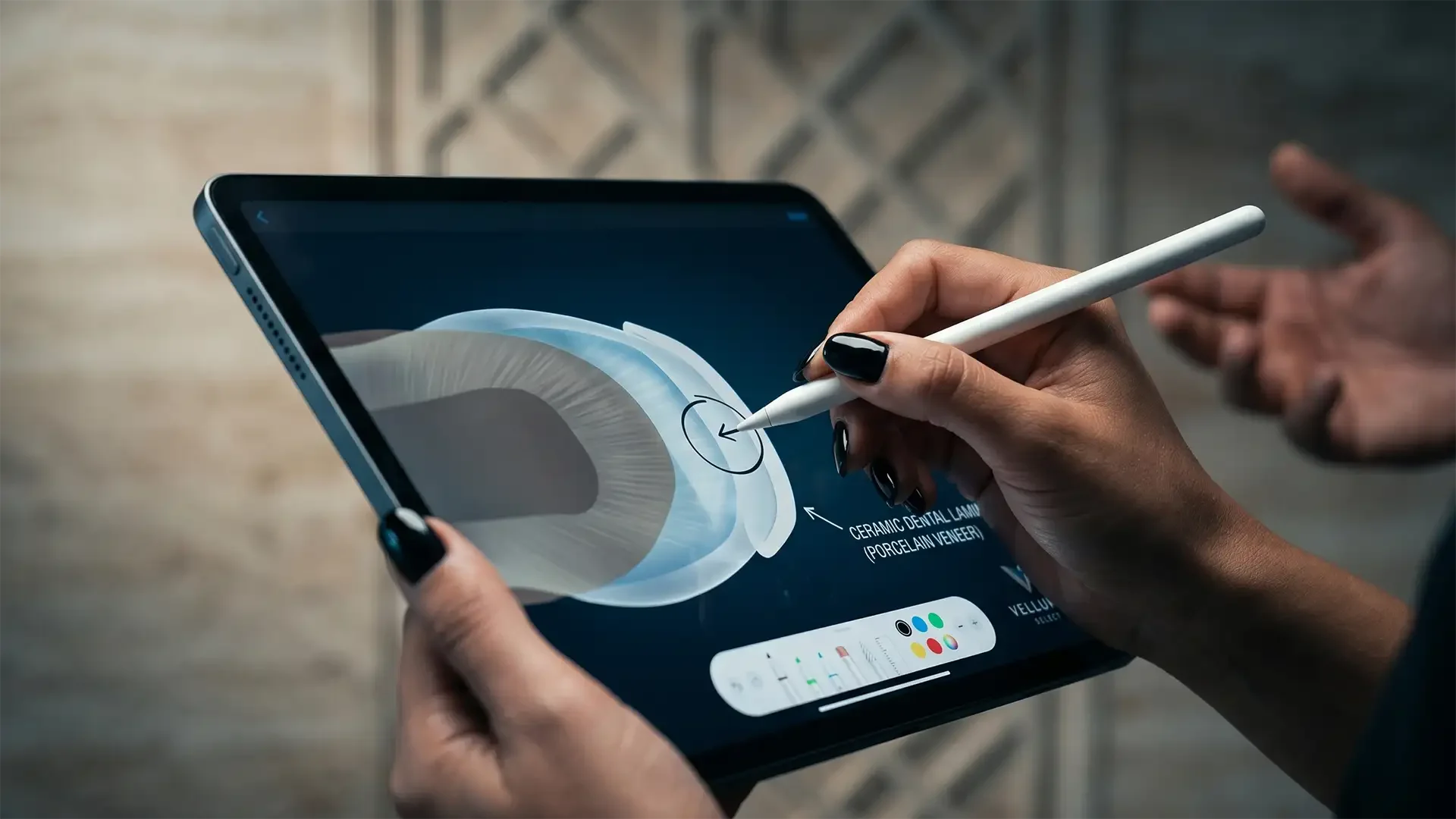
Natural teeth are not a single uniform material. Enamel is hard and rigid; dentin beneath it is elastic and shock-absorbent; the underlying pulp is living tissue sensitive to pressure and temperature. Conventional crowns fail over time partly because a rigid ceramic cap bonded onto a naturally flexible tooth creates stress concentrations at the margins — which is why crown margins crack, leak, and require replacement. Biomimetic dentistry solves this by rebuilding the tooth in layers that match the mechanical behaviour of each natural structure it replaces.
The process begins with ultra-conservative preparation: only compromised tooth structure is removed. No sound dentin is sacrificed for retention geometry. The cavity is then filled in stages — base layer, dentin substitute, and enamel-mimicking surface — each bonded with a contemporary adhesive system that seals the dentinal tubules and forms a genuine chemical bond rather than a purely mechanical one.
When Is It Used?
Biomimetic techniques are indicated for cracked teeth, large or deep cavities, worn or fractured cusps, teeth with failing restorations, and as an alternative to crowns when more than half the tooth structure remains sound. It is particularly valuable for patients with bruxism, as the layered composite build-up can be repaired and adjusted without replacing the entire restoration.
Biomimetic Inlays and Onlays
Where direct composite is insufficient — typically when cusps are missing or cavity dimensions exceed what bonded resin can reliably fill — indirect biomimetic inlays and onlays are fabricated in ceramic or reinforced composite. Unlike crowns, these do not require tooth reduction below the gum line or destruction of the entire clinical crown. The restoration replaces precisely what was lost, bonded in with a technique that distributes biting forces the same way natural enamel would. This approach is also ideal for patients with chipped or cracked teeth where the structural damage is significant but the root and remaining walls are healthy.
Your Dentist: Dr. Nesrin Sönmez
Dr. Nesrin Sönmez practises biomimetic dentistry at NS Clinic in Nişantaşı, Istanbul. Her doctoral research at Istanbul University examined the mechanical behaviour of CAD/CAM restorative materials — the same science that underpins biomimetic material selection. As a dental ceramist who fabricates her own restorations, the adhesive system, composite layering, and final ceramic surface are all executed under her direct control, eliminating inconsistencies introduced by external laboratories.
View Dr. Sönmez's full profile →
Is Biomimetic Dentistry Right for You?
Ideal candidates include patients with large, deep, or failing fillings who want to avoid a crown; patients with chipped teeth or cracked teeth where the crack does not extend below the gum line; patients with wear from bruxism who need durable, repairable restorations; and patients who have been told they need a root canal due to deep decay and want a second opinion before proceeding. A digital scan and clinical examination establish whether biomimetic restoration is achievable for your specific case.