Parkinson's Disease
Parkinson's disease (PD) is a progressive neurodegenerative disorder characterised by the loss of dopaminergic neurons in the substantia nigra pars compacta, leading to depletion of striatal dopamine and the classic triad of bradykinesia, rigidity, and resting tremor.
Understanding Parkinson's Disease
Parkinson's disease affects approximately 1 per cent of the population over age 60, making it the second most common neurodegenerative disorder after Alzheimer's disease. The pathological hallmark is the presence of Lewy bodies — abnormal aggregates of alpha-synuclein protein — within the surviving dopaminergic neurons. Clinical symptoms emerge when approximately 60 per cent of nigral dopaminergic neurons have been lost. The disease progresses relentlessly: the initial levodopa-responsive phase gradually transitions to a phase characterised by motor fluctuations, dyskinesias, and medication-refractory symptoms such as gait freezing, postural instability, and non-motor symptoms including cognitive decline and autonomic dysfunction.
Deep brain stimulation (DBS) of the subthalamic nucleus (STN) is the most important advance in Parkinson's disease management since the introduction of levodopa. DBS improves motor function, reduces medication requirements, and extends the period of good-quality life. Istanbul provides access to expert DBS neurosurgery at a fraction of Western costs.
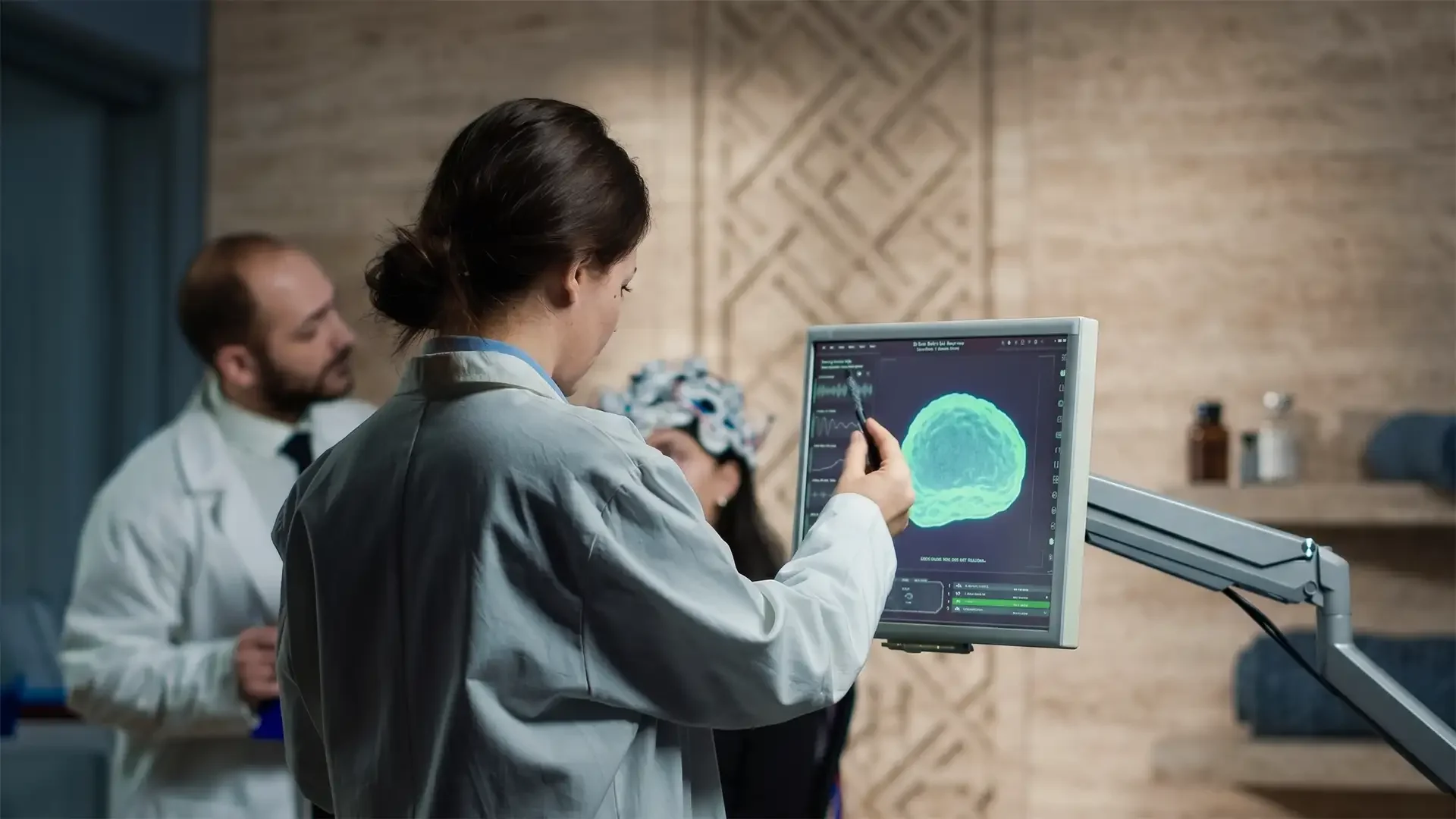
Treatment Options for Parkinson's Disease
View All ProceduresEstimulación Cerebral Profunda (ECP) en Turquía
La estimulación cerebral profunda (ECP) es un procedimiento neuroquirúrgico que implanta electrodos delgados en áreas específicas del cerebro, conectados a un generador de pulsos colocado bajo la piel cerca de la clavícula. El dispositivo envía impulsos eléctricos calibrados con precisión que modulan circuitos neuronales anormales, reduciendo los síntomas motores del Parkinson, el temblor esencial y la distonía.
arrow_forwardTratamiento del Parkinson en Turquía
La enfermedad de Parkinson es una afección neurológica progresiva causada por la pérdida de neuronas productoras de dopamina en el cerebro. Provoca temblor, rigidez, lentitud de movimientos e inestabilidad postural síntomas que empeoran con el tiempo y afectan la calidad de vida.
arrow_forwardSymptoms of Parkinson's Disease
The cardinal motor symptoms are bradykinesia (slowness of movement), resting tremor (typically a 4–6 Hz "pill-rolling" tremor of the hand that suppresses with voluntary movement), rigidity (increased resistance to passive movement, described as "cogwheel" or "lead-pipe"), and postural instability (impaired balance and righting reflexes, typically a late feature). Gait disturbance includes reduced arm swing, shuffling steps, festination (accelerating, short steps), and freezing of gait. Non-motor symptoms are equally disabling: depression, anxiety, apathy, REM sleep behaviour disorder, constipation, urinary urgency, orthostatic hypotension, and progressive cognitive impairment.
Diagnostic Pathways
Clinical diagnosis remains the gold standard — the UK Parkinson's Disease Society Brain Bank criteria require bradykinesia plus at least one of rigidity, resting tremor, or postural instability, with exclusion of alternative diagnoses. DaT-SPECT imaging (using 123I-ioflupane) demonstrates reduced striatal dopamine transporter binding and helps differentiate PD from essential tremor, drug-induced parkinsonism, and vascular parkinsonism. MRI brain is performed to exclude structural lesions. Response to levodopa — a robust and sustained improvement — supports the diagnosis of idiopathic PD and predicts a favourable response to DBS.
Advanced Treatment Options at Vellum Select
Deep Brain Stimulation (DBS)
For patients with medication-refractory motor fluctuations, disabling dyskinesias, or tremor that does not respond adequately to medications, Deep Brain Stimulation (DBS) in Turkey targeting the subthalamic nucleus (STN) is the gold-standard surgical treatment. Bilateral electrode implantation is performed under stereotactic guidance with intraoperative microelectrode recording for precise targeting. STN-DBS improves motor function by 50–60 per cent, reduces OFF time, and allows a 30–50 per cent reduction in dopaminergic medication. The procedure is performed by experienced functional neurosurgeons in partnership with movement disorder neurologists.
Parkinson's Treatment in Turkey
For patients who are not DBS candidates or prefer medical management, Vellum Select provides comprehensive Parkinson's Treatment in Turkey with expert neurologists optimising medication regimens including levodopa, dopamine agonists, MAO-B inhibitors, and COMT inhibitors.
To discuss your Parkinson's disease with a Vellum Select movement disorder specialist, contact us to arrange a consultation.